
Prolotherapy for Knee Ligament Injuries: Strengthening Your Joints to Avoid Surgery

- Published on: 12/Feb/2026
- Posted By: Arka Health
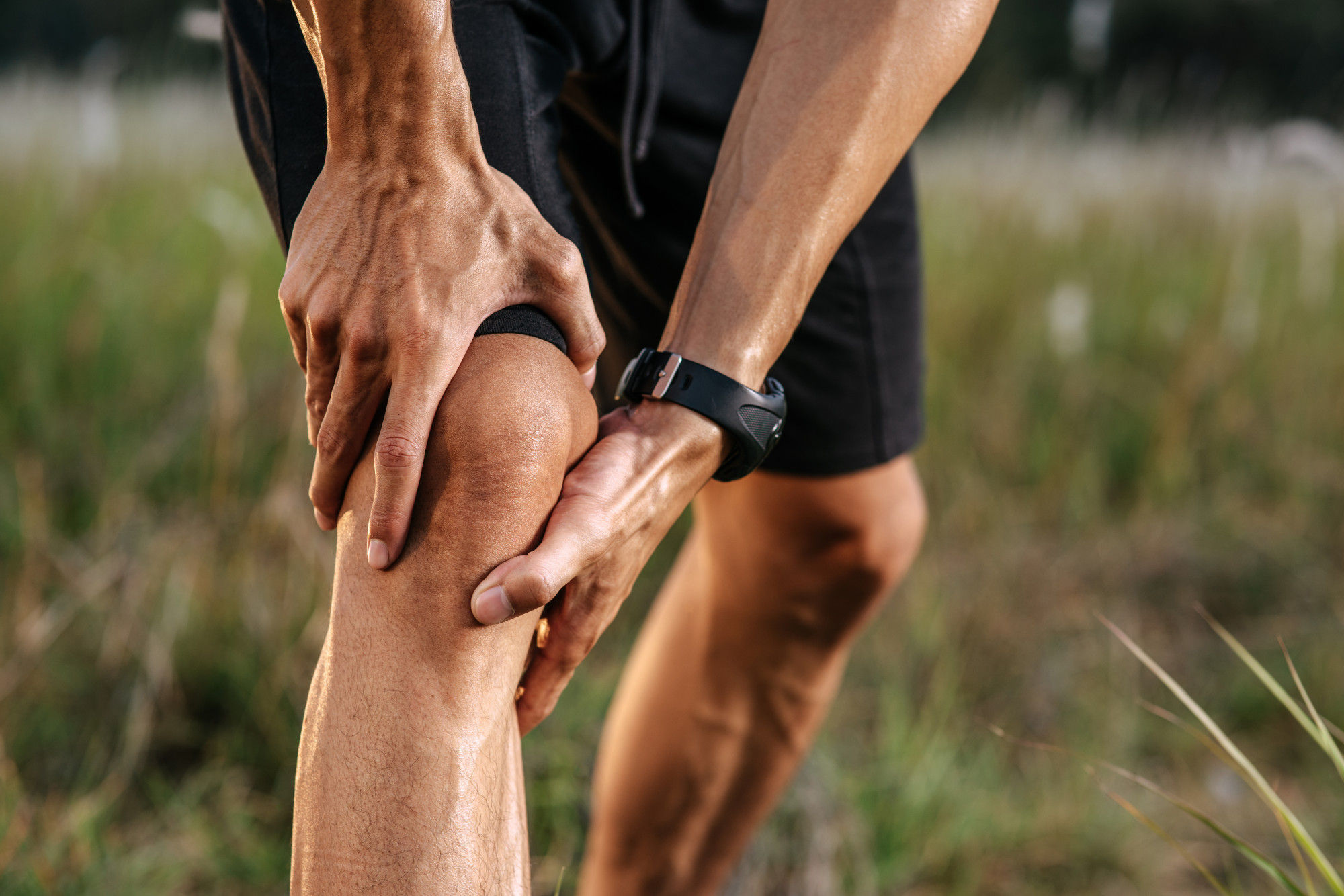
Understanding Knee Ligament Injuries Beyond MRI Reports
Knee ligament injuries are one of the most common causes of chronic knee pain, instability, and early-onset osteoarthritis. Many patients are told they have a “normal MRI” or a “minor sprain,” yet continue to experience giving way, deep joint pain, swelling after activity, or fear of movement. This disconnect happens because knee pain is often driven by ligament laxity, not complete ligament rupture.
Ligaments are not passive ropes holding bones together. They are living, sensory tissues responsible for joint stability, proprioception, and coordinated movement. When a ligament stretches beyond its elastic limit, it may not tear completely, but it loses its ability to maintain tension. This condition is known as ligament laxity.
Over time, even small degrees of ligament laxity allow abnormal joint motion. This creates shear forces inside the knee, accelerating cartilage wear, meniscal overload, and progressive degeneration. Surgery often addresses visible damage but does not always correct the underlying instability. This is where prolotherapy for knee ligament injuries becomes clinically relevant.
Functional Knee Anatomy and the Role of Ligaments
The knee is not a simple hinge. It is a dynamically stabilized joint that relies on balanced tension from multiple ligamentous structures.
Key stabilizing ligaments include:
- Anterior Cruciate Ligament (ACL)
- Posterior Cruciate Ligament (PCL)
- Medial Collateral Ligament (MCL)
- Lateral Collateral Ligament (LCL)
- Posterior capsule and coronary ligaments supporting the meniscus
These ligaments function together as a tension network. When intact, they keep the femur, tibia, and patella aligned during movement. When one or more ligaments become lax, the joint loses its mechanical precision.
Even a few millimeters of elongation can disrupt normal biomechanics. This instability often does not show clearly on static imaging such as MRI, which is taken without load or movement. Clinical examination frequently reveals instability that imaging misses.
How Knee Ligament Laxity Leads to Chronic Pain
Ligament laxity initiates a predictable pathological sequence:
- Micro-instability
The femur begins to shift abnormally on the tibia during walking, stair climbing, or twisting. - Meniscal overload
The meniscus absorbs forces it was not designed to handle, leading to degenerative tears. - Cartilage shear
Cartilage tolerates compression but not shear. Abnormal motion accelerates cartilage breakdown. - Muscle guarding
The nervous system tightens surrounding muscles to compensate, leading to chronic stiffness and fatigue. - Progressive osteoarthritis
Over years, the joint environment becomes inflammatory and degenerative.
This explains why many patients develop arthritis years after an untreated ligament injury, even without a major traumatic event.
What Is Prolotherapy and Why It Works
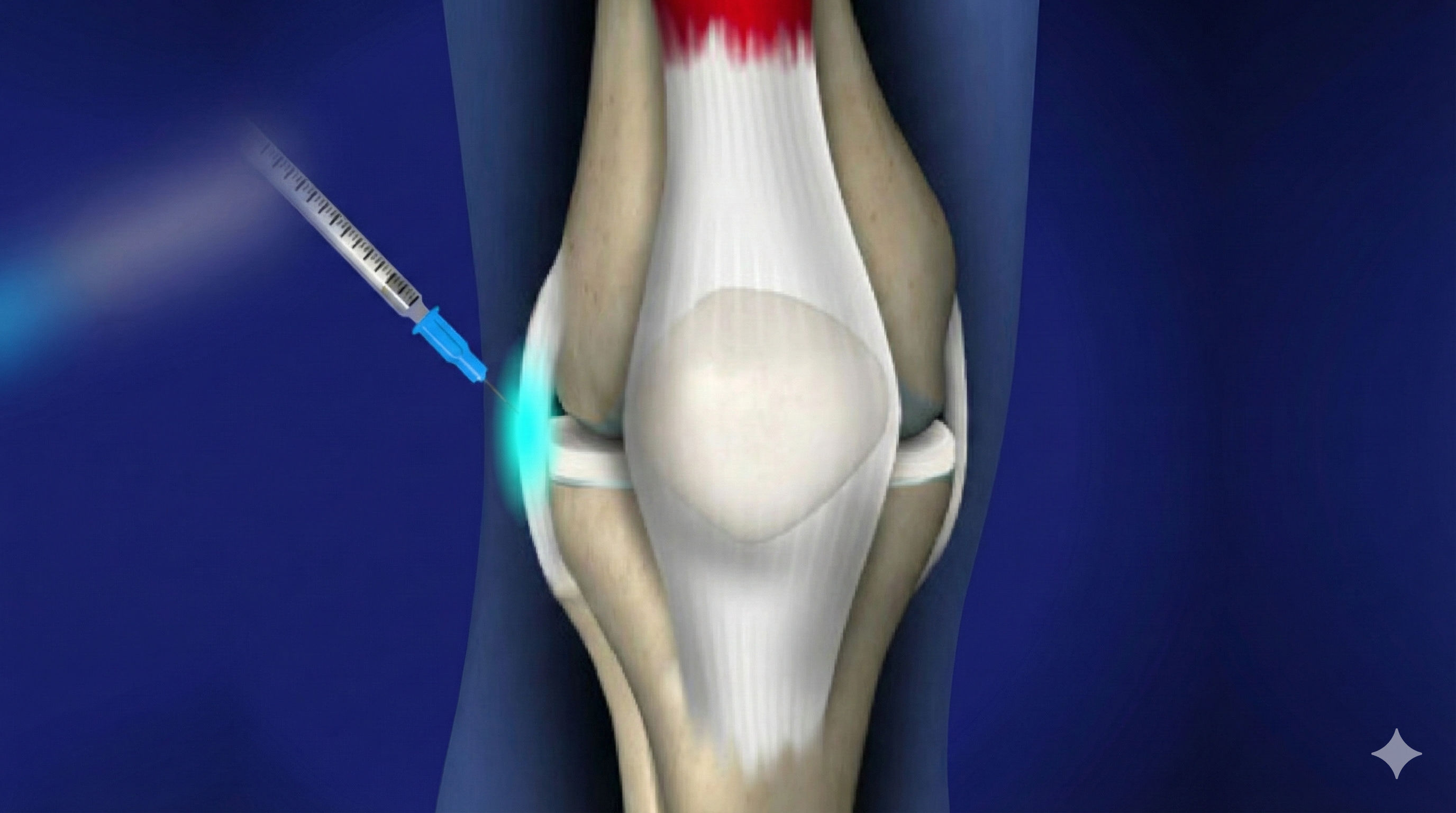
Prolotherapy is a regenerative injection therapy designed to stimulate the body’s natural repair mechanisms. It works by restarting the healing cascade in chronically injured connective tissue.
Unlike corticosteroid injections, which suppress inflammation, prolotherapy uses controlled inflammation to promote tissue repair.
The most commonly used agent is hypertonic dextrose, typically in concentrations between 12.5 percent and 25 percent.
Biological Mechanism of Prolotherapy
Phase 1: Controlled Inflammatory Activation
The injected dextrose creates localized cellular stress at the ligament attachment sites. This signals the immune system that tissue repair is required.
Phase 2: Fibroblast Proliferation
Growth factors such as platelet-derived growth factor and transforming growth factor beta are released. Fibroblasts migrate into the area and begin synthesizing new collagen.
Phase 3: Collagen Remodeling
Over weeks to months, immature collagen matures into stronger type I collagen. Fibers align along lines of stress, increasing tensile strength and ligament stiffness.
This process thickens and tightens the ligament, restoring joint stability rather than masking pain.
Prolotherapy for ACL Injuries
Contrary to traditional beliefs, partial ACL tears and some complete tears can respond to prolotherapy.
- Partial ACL injuries often respond well, as remaining fibers can be strengthened.
- Complete tears may still regain functional stability through reinforcement of secondary stabilizers such as the MCL, LCL, and posterior capsule.
Many patients become “functional copers,” meaning they regain stability and function without surgical reconstruction.
This approach is especially relevant for:
- Non-athletes
- Older adults
- Patients wishing to avoid surgery
- Individuals with failed ACL reconstruction and persistent instability
Meniscal Pain and Prolotherapy
Meniscal tears frequently coexist with ligament laxity. The meniscus is anchored by small coronary ligaments, which can become lax and allow meniscal extrusion.
Prolotherapy targets these supporting structures, often reducing pain even when MRI-visible tears remain. This challenges the assumption that every meniscal tear requires surgical removal.
Prolotherapy for Knee Osteoarthritis
In knee osteoarthritis, pain often originates from:
- Stretched joint capsule
- Inflamed ligament attachments
- Subchondral bone stress
By stabilizing the joint, prolotherapy reduces shear forces and slows further cartilage loss. Clinical studies consistently demonstrate improvements in pain scores and functional outcomes in knee osteoarthritis patients treated with prolotherapy.
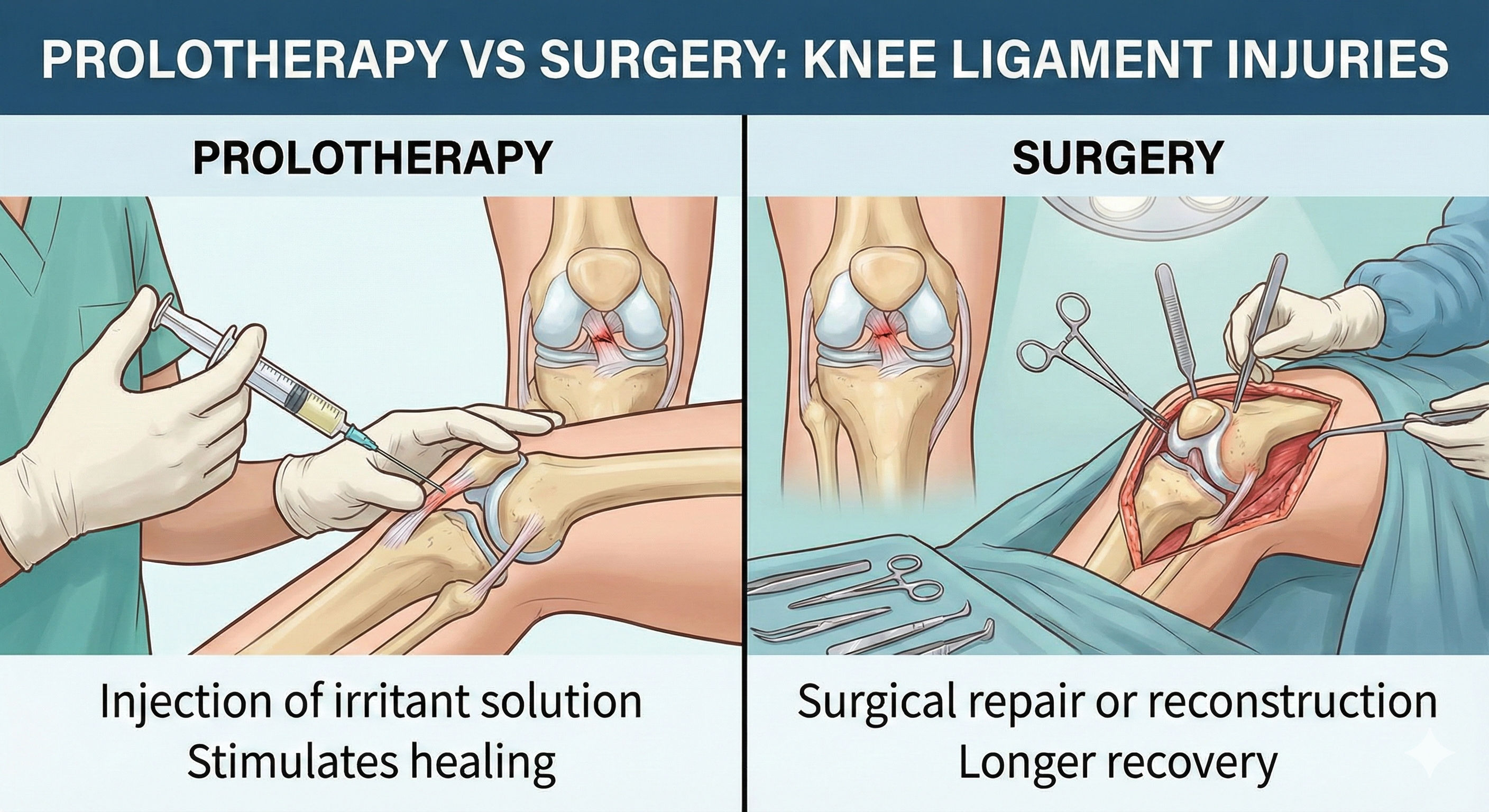
Prolotherapy vs Surgery for Knee Ligament Injuries
Invasiveness
Surgery involves graft harvesting, bone drilling, and permanent alteration of joint anatomy. Prolotherapy uses needle-based injections without tissue removal.
Recovery
Surgical recovery often requires months of restricted activity. Prolotherapy encourages early controlled movement and avoids prolonged immobilization.
Long-term joint health
Surgical reconstruction does not eliminate the risk of osteoarthritis. Prolotherapy aims to restore native biomechanics and preserve proprioceptive feedback.
Cost and downtime
Prolotherapy is significantly less expensive and avoids extended time away from work or sport.
Integrative Healing at ARKA Anugraha Hospital
At ARKA Anugraha Hospital, prolotherapy is not offered in isolation. Joint healing is influenced by systemic health.
Gut-joint axis
Intestinal permeability and gut dysbiosis increase systemic inflammation, which impairs ligament repair. Addressing gut health improves outcomes.
Metabolic health
Insulin resistance and elevated HbA1c lead to collagen glycation, making ligaments brittle and resistant to healing. Metabolic optimization is essential.
Nutritional support
Collagen synthesis requires adequate vitamin C, zinc, copper, and amino acids. Deficiencies delay healing.
Advanced regenerative support
Where appropriate, ARKA integrates platelet-rich plasma, peptide therapy, and IV nutrient support to enhance prolotherapy outcomes.
This integrative approach is supervised clinically, with treatment decisions based on examination, imaging, and metabolic evaluation. Dr Gaurang Ramesh is involved in developing these protocols to ensure regenerative treatments are aligned with systemic health.
What to Expect During Treatment
- Sessions are typically spaced 3 to 4 weeks apart
- Most patients require 3 to 6 sessions
- Temporary soreness for a few days is expected
- NSAIDs are avoided to allow healing inflammation
- Progressive movement is encouraged
Improvement often begins after the second or third session, with stability continuing to improve over several months.
Conclusion
Prolotherapy for knee ligament injuries offers a biologically grounded alternative to surgery by addressing the true driver of chronic knee pain: instability. By restoring ligament tension, improving proprioception, and stabilizing joint mechanics, prolotherapy helps many patients avoid invasive procedures and preserve long-term knee health.
When combined with integrative medical care, prolotherapy becomes a strategy for joint preservation rather than short-term pain control.
FREQUENTLY ASKED QUESTIONS
- Can prolotherapy heal a torn ACL?
Partial ACL tears respond well. Some complete tears regain functional stability through secondary ligament strengthening. - Is prolotherapy painful?
Discomfort is usually mild to moderate and temporary. Local anesthetic is used. - How many sessions are needed?
Most patients require 3 to 6 sessions depending on severity. - Can I walk after treatment?
Yes. Gentle movement is encouraged immediately. - Should I avoid painkillers?
NSAIDs should be avoided. Paracetamol is acceptable. - Is prolotherapy safe?
When performed correctly, it has a strong safety profile. - Does prolotherapy regrow cartilage?
It primarily stabilizes the joint, which can slow cartilage loss and improve joint environment. - Can it help failed knee surgery?
Yes. It often addresses instability missed during surgery. - Is prolotherapy better than steroid injections?
Steroids suppress pain temporarily. Prolotherapy promotes healing. - Who is not a good candidate?
Active infection, severe bleeding disorders, or inability to follow post-care protocols. - How long do results last?
Results are often long-lasting because tissue is strengthened, not numbed. - Is prolotherapy covered by insurance?
Coverage varies. Many consider it cost-effective compared to surgery.
Explore Arka Recipes
Discover recipes that blend taste with health, crafted by our experts for your well-being.
Arka Diagnostics
Discover groundbreaking diagnostic services exclusive to India, now available at Arka Health, Bangalore