
Prolotherapy for Chronic Neck Pain: Restoring Stability and Alleviating Discomfort
- Published on: 26/Feb/2026
- Posted By: Arka Health

Foundational Understanding: Rethinking Chronic Neck Pain
Chronic neck pain is one of the most prevalent yet misunderstood musculoskeletal disorders. While many patients are treated with analgesics, muscle relaxants, steroid injections, or even radiofrequency ablation, these interventions primarily suppress symptoms rather than address structural pathology.
In a significant subset of patients, the root cause is not disc degeneration or muscle strain. It is cervical instability caused by ligament laxity. This distinction is clinically crucial because structural instability requires regenerative repair, not temporary suppression.
Prolotherapy for chronic neck pain focuses on restoring ligament integrity, improving cervical spine stability, and reducing cervicogenic symptoms through biological repair rather than mechanical masking.
Cervical Spine Stability: A Tensegrity System
The cervical spine balances a 10 to 12 pound head across seven vertebrae while allowing multidirectional movement. Unlike weight-bearing joints, cervical stability is not achieved primarily through compression but through tension.
According to Panjabi’s model, spinal stability depends on three subsystems:
- Passive subsystem: vertebrae, discs, and ligaments
• Active subsystem: muscles and tendons
• Neural control subsystem: proprioceptive and central nervous coordination
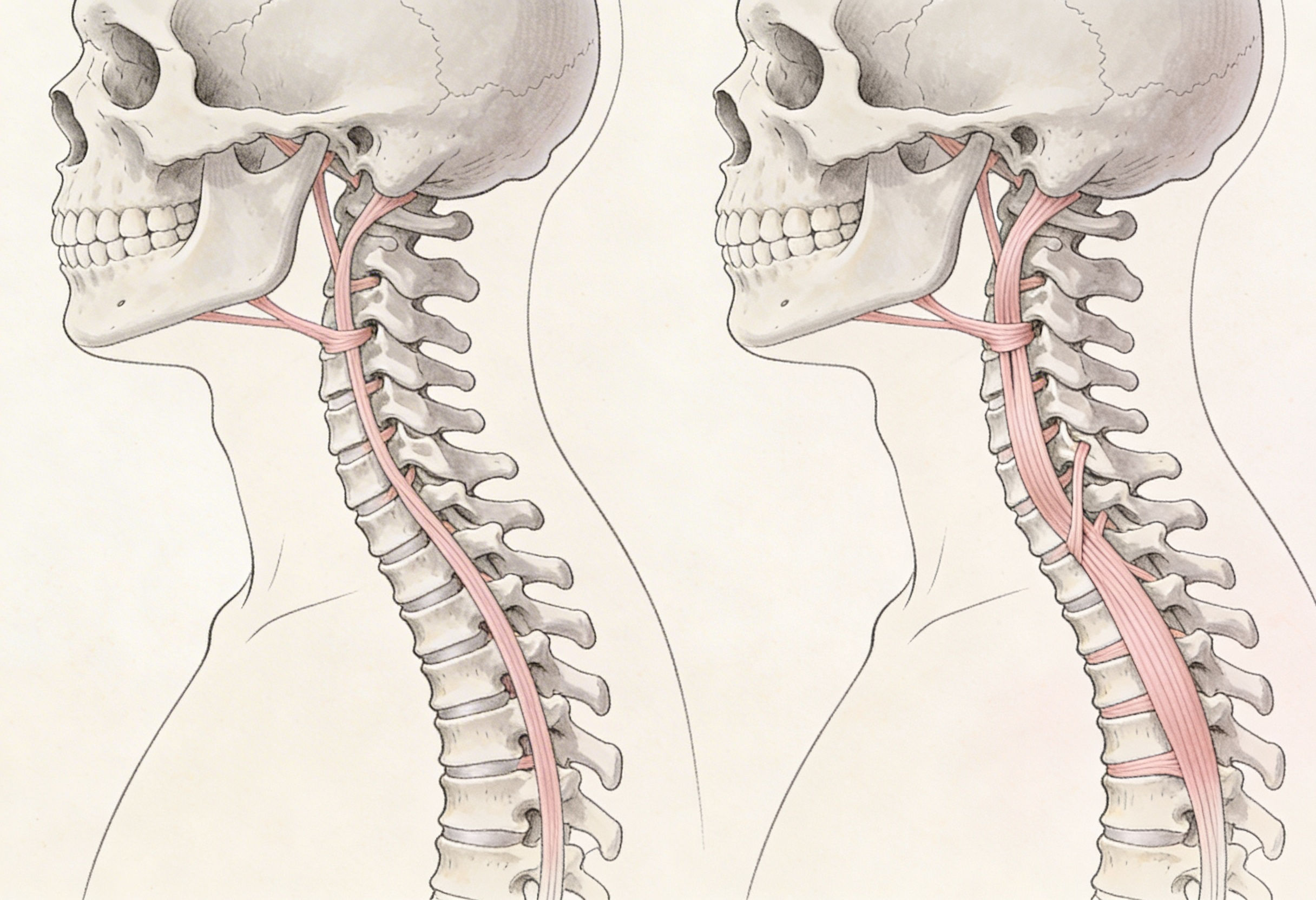
When ligaments such as the capsular ligaments, supraspinous ligament, interspinous ligament, and nuchal ligament lose tensile strength, the passive subsystem fails. Muscles compensate through persistent contraction, leading to chronic spasm and fatigue.
This explains why neck pain prolotherapy targets ligament restoration rather than muscle relaxation.
Ligament Laxity and the Concept of Creep
Ligaments are viscoelastic structures. When exposed to repetitive strain or sudden trauma, they may undergo permanent elongation known as creep.
Two primary mechanisms contribute:
Macrotrauma
Whiplash injuries produce acceleration deceleration forces that stretch capsular ligaments beyond physiological limits. Sub-failure injuries may not appear on MRI but create mechanical instability.
Microtrauma
Prolonged forward head posture from device use increases torque on posterior cervical ligaments. At 45 degrees of flexion, cervical load exceeds 45 pounds. Sustained tensile stress gradually elongates ligament fibers.
Once laxity develops, vertebrae translate excessively during motion. This abnormal mobility irritates facet joints and sensitizes mechanoreceptors, leading to chronic pain patterns resistant to conservative therapy.
Cervical spine prolotherapy addresses this mechanical failure directly.
Biological Mechanism of Prolotherapy
Prolotherapy is a regenerative injection therapy that reactivates the stalled healing cascade within damaged ligaments.
Phase 1: Inflammatory Activation
Hyperosmolar dextrose induces mild osmotic stress. This stimulates cytokine release including PDGF and TGF beta, recruiting macrophages and initiating repair.
Phase 2: Fibroblast Proliferation
Fibroblasts synthesize new extracellular matrix, predominantly Type III collagen.
Phase 3: Remodeling
Type III collagen is replaced by Type I collagen. Fiber alignment follows mechanical stress lines, restoring ligament tensile strength and joint stability.
Unlike corticosteroids, which are catabolic and inhibit collagen synthesis, prolotherapy is anabolic and promotes tissue strengthening.
Neuro-Structural Consequences of Cervical Instability
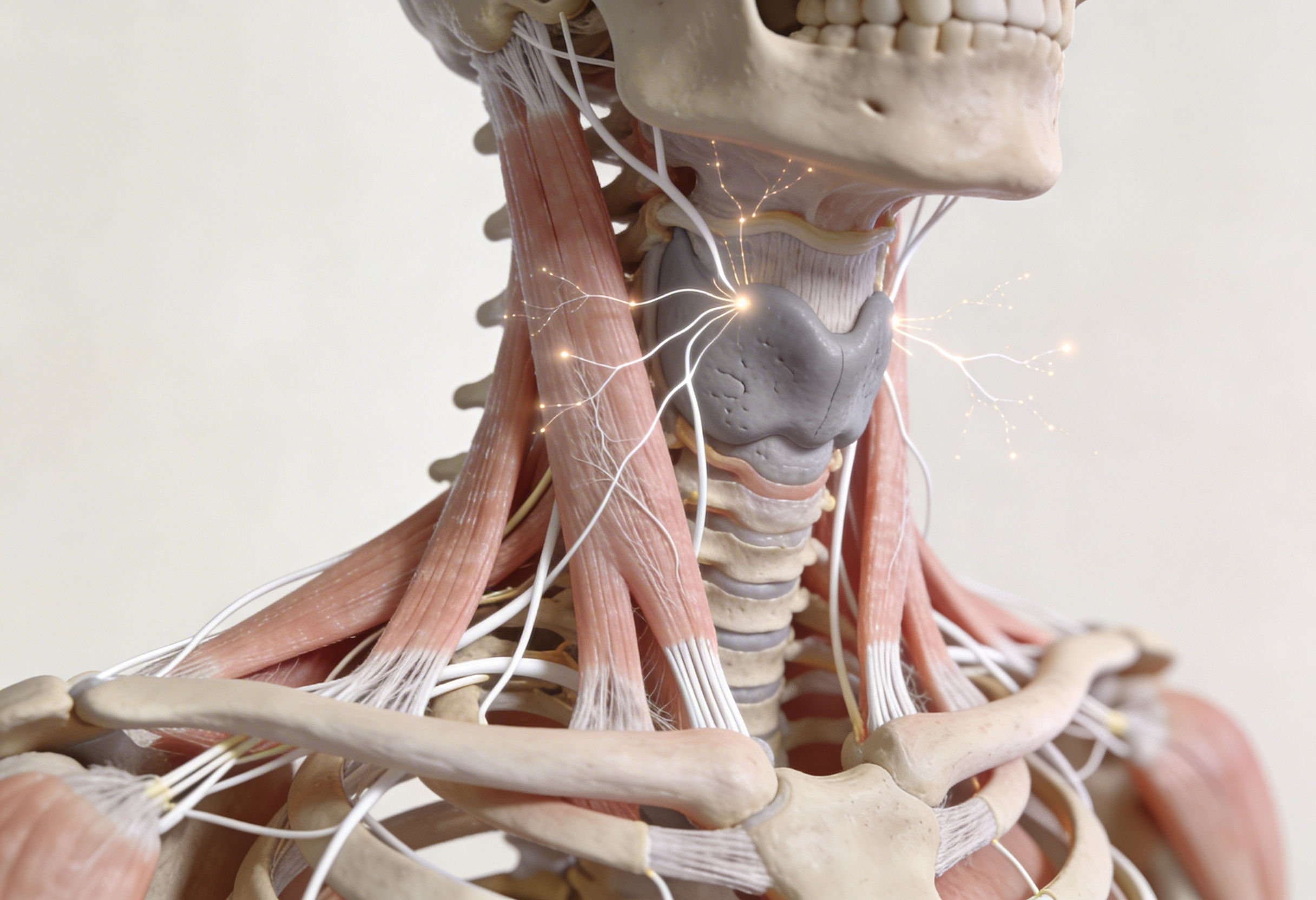
Ligaments contain mechanoreceptors responsible for proprioceptive signaling. When ligament tension is abnormal, feedback to the central nervous system becomes inconsistent.
This sensory mismatch can result in:
- Cervicogenic dizziness
- Visual disturbance
- Head pressure
- Disequilibrium
By restoring physiological tension, non-surgical neck pain treatment using prolotherapy recalibrates proprioceptive input and reduces these complex symptoms.
Development of Cervical Instability
Chronic neck pain evolves through a degenerative cascade.
Stage 1: Dysfunction
Mild laxity produces intermittent mechanical pain and muscular guarding.
Stage 2: Instability
Translational motion increases. Facet irritation and disc stress develop.
Stage 3: Stabilization
The body forms osteophytes to restrict motion. This may lead to foraminal narrowing and radicular symptoms.
Cervical instability treatment is most effective during the instability phase before irreversible structural degeneration occurs.
Clinical Presentation
Symptoms vary widely and often extend beyond localized pain.
Mechanical Neck Pain
Gravity-dependent discomfort worsens with sustained posture and improves with support.
Cervicogenic Headache
Upper cervical instability can refer to pain through the trigeminocervical nucleus, causing occipital or orbital headaches.
Dizziness and Balance Disturbance
Erratic proprioceptive signaling causes floating sensations rather than rotational vertigo.
Autonomic Symptoms
In severe cases, sympathetic irritation may cause tinnitus, palpitations, or anxiety-like symptoms.
Understanding this constellation supports the role of regenerative injection therapy neck protocols in treating root causes.
Why Cervical Instability Is Frequently Missed
Standard MRI is performed in supine neutral position. Instability is a motion-dependent disorder.
Dynamic pathology may not appear on static imaging.
Functional imaging such as flexion-extension radiographs or digital motion X-ray can reveal translational instability or facet gapping.
Additionally, protective muscle spasm often masks excessive motion during examination, leading to misdiagnosis as myofascial pain.
Recognizing ligament laxity neck pain requires clinical expertise beyond imaging reports.
Prolotherapy as a Non-Surgical Neck Pain Treatment
Prolotherapy for chronic neck pain is indicated in:
- Capsular ligament laxity
• Refractory mechanical neck pain
• Cervicogenic headaches
• Pseudoradiculopathy
• Cervical instability without severe cord compression
Treatment typically involves 3 to 6 sessions spaced 4 to 6 weeks apart to align with collagen remodeling timelines.
When combined with rehabilitation and metabolic optimization, outcomes demonstrate sustained improvement in pain scores and functional mobility.
Integrative Protocol at ARKA Anugraha Hospital
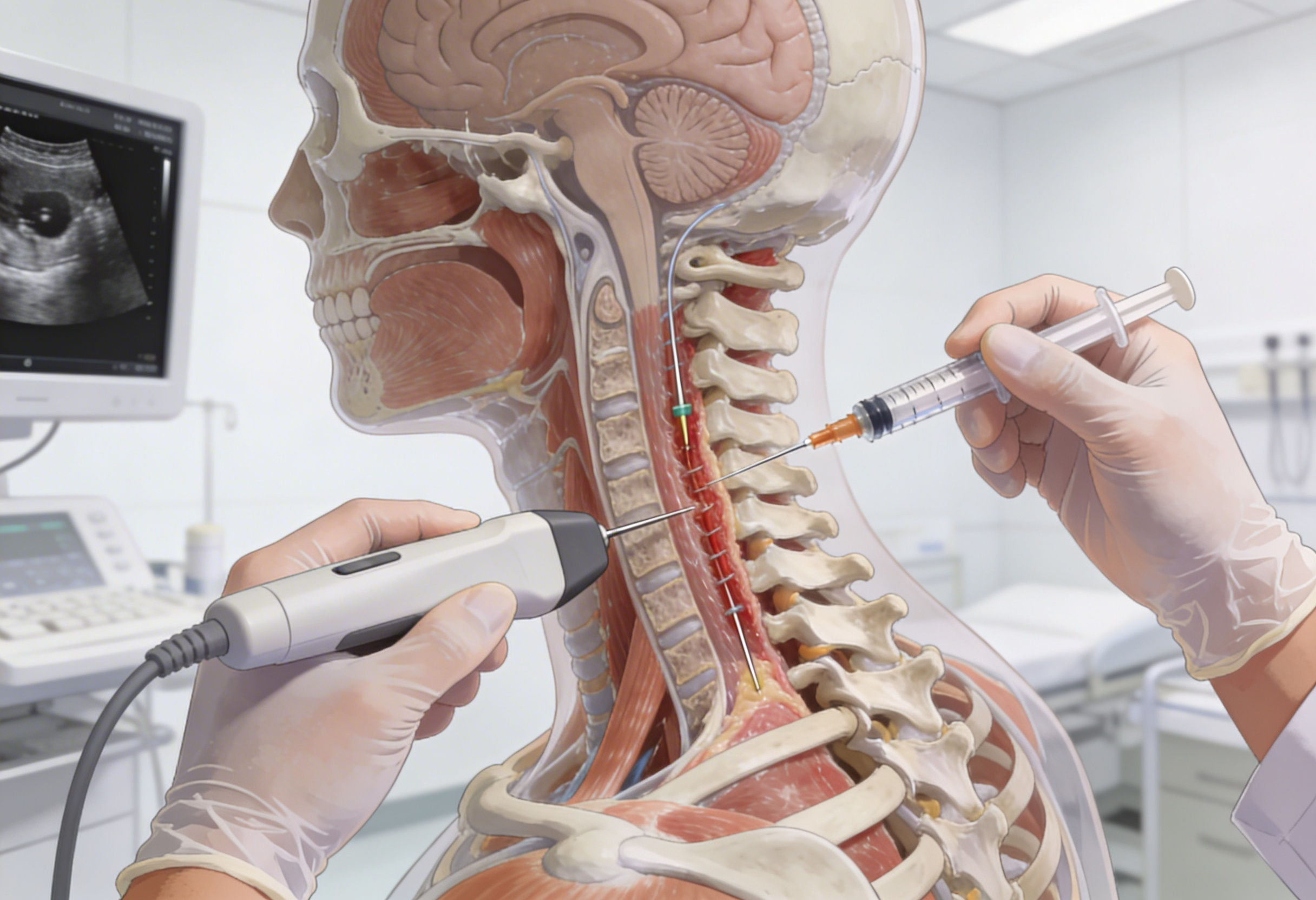
At ARKA Anugraha Hospital, cervical spine prolotherapy is delivered within a structured regenerative framework.
Precision Injection
Targeted treatment of capsular ligaments, supraspinous ligaments, and stabilizing attachments ensures biomechanical restoration.
Nutritional Support
Collagen synthesis requires Vitamin C, zinc, copper, and adequate amino acid intake. Patients receive structured nutritional guidance.
Neuromuscular Re-education
Deep cervical flexor strengthening and proprioceptive retraining restore active subsystem balance.
Postural Correction
Addressing forward head posture prevents recurrence of ligament creep.
This comprehensive cervical instability treatment model focuses on long-term structural integrity rather than temporary pain relief.
Feature | Steroids | Surgery | Prolotherapy |
Mechanism | Inflammation suppression | Mechanical fixation | Collagen regeneration |
Tissue Effect | Catabolic | Altered biomechanics | Anabolic |
Motion Preservation | Yes short-term | Reduced | Preserved |
Long-term Stability | No | Variable | Improved |
Invasiveness | Low | High | Moderate |
Rolotherapy offers a balance between safety, structural repair, and preservation of physiological motion.
Chronic neck pain is frequently a disorder of ligament laxity and cervical instability rather than disc pathology alone. Conventional palliative treatments suppress symptoms but fail to restore stability.
Prolotherapy for chronic neck pain stimulates controlled regeneration, tightens lax ligaments, improves proprioceptive signaling, and restores cervical tensegrity.
When delivered within an integrative model combining metabolic optimization and neuromuscular retraining, regenerative injection therapy neck protocols offer a durable non-surgical solution for patients seeking structural recovery.
Frequently Asked Questions
1. How effective is prolotherapy for chronic neck pain?
Clinical studies show significant improvement in pain and stability in patients with documented cervical ligament laxity.
2. Is cervical spine prolotherapy safe?
When performed by experienced clinicians with anatomical precision, it is considered safe with low complication rates.
3. How many sessions are required?
Most patients require 3 to 6 sessions depending on severity.
4. Is it painful?
Mild procedural discomfort is expected. Post-injection soreness typically resolves within a few days.
5. Can it help with dizziness?
Yes, particularly in cervicogenic dizziness linked to proprioceptive dysfunction.
6. Does it replace surgery?
It may delay or prevent surgery in cases of instability without severe stenosis.
7. Why avoid NSAIDs after treatment?
NSAIDs inhibit the inflammatory cascade necessary for collagen regeneration.
8. Can prolotherapy treat whiplash injuries?
Yes, especially when ligament laxity persists after acute trauma.
9. Is recovery immediate?
Improvement is progressive over weeks as collagen remodels.
10. Does it treat disc herniation?
It primarily treats ligament instability but may reduce secondary disc stress.
11. Who is not a candidate?
Patients with severe myelopathy or advanced spinal cord compression require specialist evaluation.
12. How is it different from PRP?
PRP delivers concentrated platelets. Prolotherapy uses hyperosmolar dextrose to stimulate endogenous healing.
13. Is it covered by insurance?
Coverage varies by provider and policy.
Explore Arka Recipes
Discover recipes that blend taste with health, crafted by our experts for your well-being.
Arka Diagnostics
Discover groundbreaking diagnostic services exclusive to India, now available at Arka Health, Bangalore