

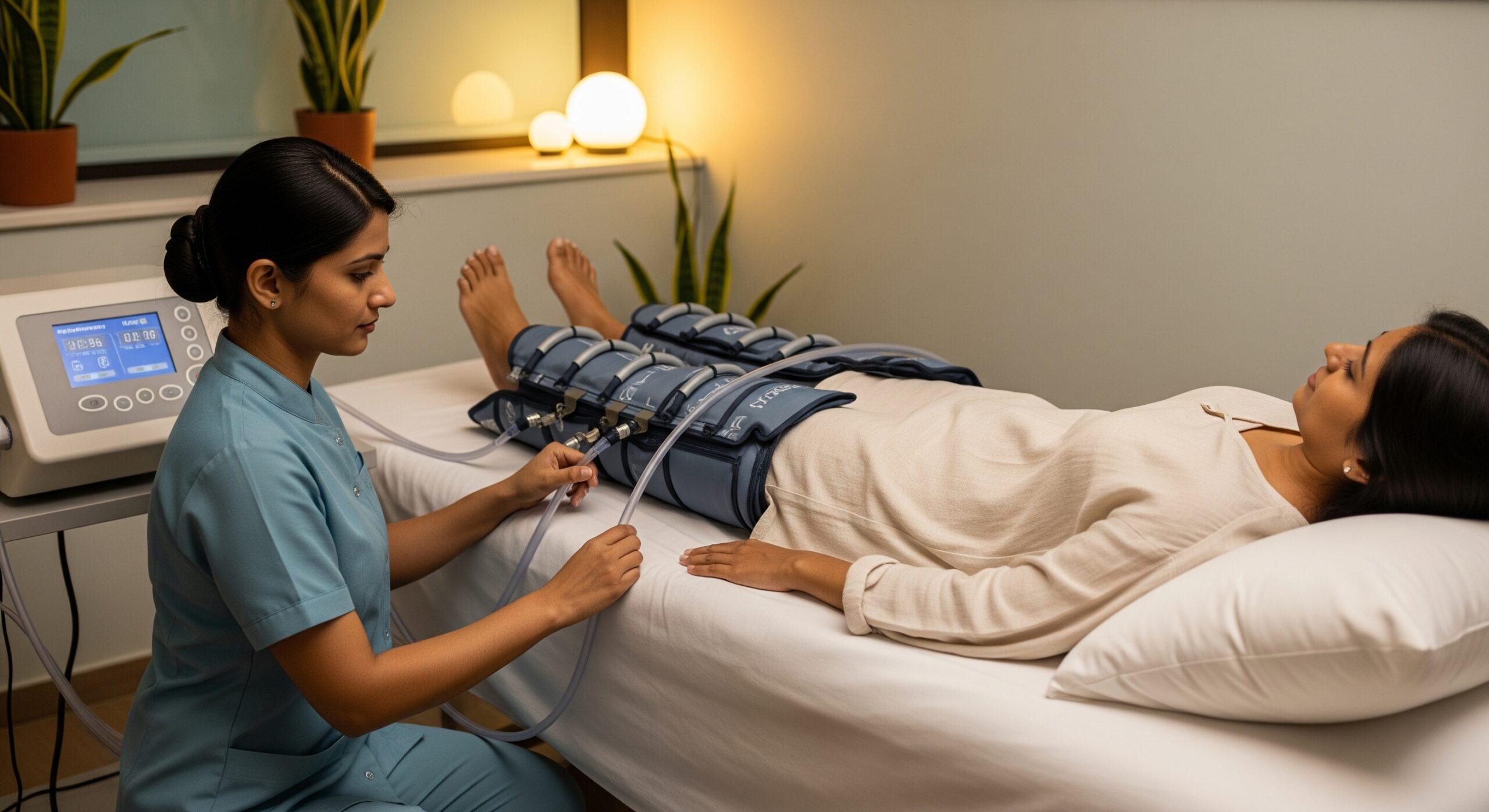
Enhanced External Counterpulsation is a sophisticated, non-invasive therapy that improves blood flow to the heart muscle. Its origins trace back to concepts developed over half a century ago, evolving from early hydraulic systems to the modern, computer-controlled pneumatic devices used today. The fundamental goal of EECP is to increase the supply of oxygen-rich blood to the heart while simultaneously reducing the heart’s workload. It achieves this through a powerful yet elegant combination of mechanical action and a resulting biological cascade that can produce long-lasting benefits.
The procedure itself involves a patient lying comfortably on a treatment bed. A trained technician wraps three sets of large, inflatable cuffs, similar in feel to blood pressure cuffs around the patient’s calves, lower thighs, and upper thighs/buttocks. These cuffs are connected to an air compression system that is precisely synchronized with the patient’s own heartbeat, which is monitored continuously by an electrocardiogram (ECG). The timing is critical and is triggered by the R-wave on the ECG, which signals the start of a new cardiac cycle. This precise timing allows for two key hemodynamic effects: diastolic augmentation and systolic unloading.
During diastole, the period when the heart muscle relaxes and fills with blood, the cuffs inflate sequentially in a wave-like motion from the bottom up: first the calves, then the thighs, and finally the buttocks.1 This coordinated squeeze pushes a significant volume of blood from the lower body back up towards the heart. This action, known as diastolic augmentation, dramatically increases blood pressure in the aorta specifically during the heart’s resting phase. This is profoundly important because the coronary arteries, the vessels that supply the heart muscle itself with blood receive the majority of their blood flow during diastole. By boosting this diastolic pressure, EECP effectively forces more oxygenated blood into the heart muscle at the very moment it needs it most.7
Just as the heart is about to begin its next contraction (systole), all three sets of cuffs deflate rapidly and at the same time.7 This sudden release of pressure creates a vacuum-like effect in the arteries of the lower limbs, significantly reducing resistance. This is called systolic unloading.
With less resistance to push against, the heart can eject blood more easily and efficiently, which decreases its overall workload and reduces its oxygen demand.5 This combination of increasing oxygen supply during rest and decreasing oxygen demand during work is the immediate mechanical benefit of each EECP session.
However, the true power of EECP therapy lies in the long-term biological changes it stimulates. The repeated increase in blood flow and pressure during the 35-hour treatment course creates a physical force on the inner lining of the arteries, known as the endothelium. This force, called endothelial shear stress, is a powerful biological signal that triggers a cascade of beneficial vascular repair mechanisms. It stimulates the endothelial cells to produce more
nitric oxide, a potent molecule that helps relax and widen blood vessels, while simultaneously reducing levels of endothelin-1, a substance that constricts vessels. The result is improved endothelial function, reduced arterial stiffness, and healthier, more flexible arteries.
Most remarkably, this sustained stimulation promotes angiogenesis (the growth of entirely new blood vessels) and arteriogenesis (the widening and maturation of small, dormant collateral vessels). The body is essentially prompted to grow its own new pathways for blood to flow around existing blockages. This creation of a “natural bypass” is a key reason why the benefits of EECP therapy are not temporary but can last for years after the treatment course is complete. The therapy is not just a mechanical aid; it is a biomodulatory treatment that awakens the body’s innate capacity for vascular remodeling and repair.
The decision to proceed with EECP therapy is based on a thorough medical evaluation and specific clinical criteria. Patient selection is a process of careful consideration, ensuring that the therapy is directed toward those most likely to benefit. The primary, FDA-approved, and widely reimbursed indication for EECP is for a specific group of patients suffering from chronic angina, while its role in treating heart failure is more nuanced and continues to be studied.
The ideal candidate for EECP is often described as a “no-option” patient someone who continues to suffer from debilitating symptoms despite having exhausted more conventional treatments. This positioning makes EECP a crucial therapeutic lifeline for a growing population of cardiac patients.
The primary indication for EECP therapy is refractory angina pectoris. It is approved by the FDA and covered by Medicare and most private insurance carriers for patients with disabling, chronic stable angina. The eligibility criteria are quite specific and are designed to identify patients for whom EECP is the most appropriate next step.
Generally, a patient must have Class III or Class IV angina as defined by the Canadian Cardiovascular Society (CCS) classification system, which means their chest pain significantly limits normal physical activity. Furthermore, the angina must be “refractory,” meaning it persists despite the use of maximal medical therapy (e.g., nitrates, beta-blockers).
A critical component of eligibility is that the patient is not considered a good candidate for revascularization procedures such as coronary artery bypass grafting (CABG) or percutaneous coronary intervention (PCI), which includes angioplasty and stenting.
A cardiologist or cardiothoracic surgeon may determine this for several reasons:
The role of EECP in treating heart failure is an area of active research and evolving guidelines. While numerous studies have reported that EECP can improve exercise tolerance, quality of life, and New York Heart Association (NYHA) functional class in patients with stable heart failure, its coverage and application are not as universally established as they are for angina. Many insurance policies consider EECP for heart failure in the absence of angina to be investigational. Therefore, coverage is often dependent on the patient having both heart failure and refractory angina. Patients with acutely worsening or “decompensated” heart failure are not candidates for the therapy.
Condition | Key Eligibility Criteria |
Chronic Stable Angina (Primary Indication) | • Canadian Cardiovascular Society (CCS) Class III or IV angina. • Angina is refractory to maximum medical therapy. • Not a suitable candidate for bypass surgery (CABG) or stenting (PCI) due to high surgical risk, unfavorable coronary anatomy, or having had prior failed procedures. |
Heart Failure (Investigational/Nuanced Use) | • Often requires coexisting refractory angina for insurance coverage. • Patient must have stable heart failure (e.g., NYHA Class II-III). • Acutely decompensated heart failure is a contraindication. |

Understanding the practical aspects of the EECP treatment journey can help demystify the process and set clear expectations for patients and their families. The therapy is administered as an outpatient procedure, allowing individuals to maintain their daily routines without the need for hospitalization. The standard treatment protocol is designed to deliver a specific “therapeutic dose” necessary to trigger the long-term biological benefits of the therapy.
A complete course of EECP therapy consists of 35 one-hour treatment sessions. The most common schedule involves attending sessions once a day, five days a week, for seven consecutive weeks. This consistent application is crucial for achieving the cumulative effect needed to stimulate vascular remodeling. While it is important to attend all scheduled sessions, missed appointments can typically be rescheduled to ensure the full 35-hour course is completed. Evidence from major clinical trials suggests that completing the full course is directly related to the magnitude of the anti-anginal benefit, underscoring the importance of this commitment.
During each one-hour session, the patient’s experience is designed to be as comfortable as possible. After changing into special, soft treatment pants to prevent skin irritation, the patient lies on a cushioned treatment table. A trained technician then places the three sets of cuffs around the legs and buttocks, along with EKG electrodes on the chest for heart rhythm monitoring. A small sensor, called a finger plethysmograph, is clipped to the finger. This device monitors blood oxygen levels and displays the pressure waves generated by the treatment, allowing the technician to precisely adjust the timing of cuff inflation and deflation to achieve the most effective circulatory assistance for that individual patient.
Once the treatment begins, patients are encouraged to relax. Many use the time to read, listen to music, watch television, or even take a nap. The primary sensation is a firm, rhythmic squeezing or “hugging” of the legs and buttocks. While this feeling may be unusual during the first session, most patients quickly become accustomed to the pressure.
EECP is often described as a form of “passive exercise” because it generates an internal cardiovascular workout without any physical effort from the patient. Because of this, it is common and entirely normal for patients to feel tired or fatigued after the first few treatments, especially if they have been inactive due to their cardiac symptoms. This is often referred to as the “training period”. This initial tiredness typically resolves after the first week of therapy. As the treatment progresses, most patients begin to report a noticeable increase in their energy levels, often by the third or fourth week.
The clinical evidence supporting the benefits of EECP therapy is substantial, with data from randomized controlled trials and large patient registries demonstrating significant and lasting improvements in symptoms, heart function, and overall quality of life. These benefits are not merely subjective feelings of wellness; they are backed by objective, measurable improvements in cardiovascular performance. The ultimate result for many patients is a positive feedback loop: by reducing the symptoms that limit activity, EECP enables them to embrace a more active lifestyle, which further strengthens their heart and overall health.
One of the most immediate and impactful benefits of EECP is a dramatic reduction in angina. Patients consistently report that their chest pain becomes less frequent, less intense, and is triggered by higher levels of exertion. The landmark Multicenter Study of Enhanced External Counterpulsation (MUST-EECP) trial demonstrated a statistically significant reduction in angina episodes for patients receiving active EECP compared to a sham treatment.
Large-scale registry data reinforces this, with one recent study of symptomatic patients showing that weekly anginal events plummeted from an average of 13.1 before treatment to just 3.2 after. This profound symptom relief naturally leads to a decreased need for anti-anginal medications, particularly fast-acting sublingual nitroglycerin. In one major registry study, 52% of patients were able to stop using their nitroglycerin altogether after completing the therapy.
Beyond symptom relief, EECP leads to objective, measurable improvements in heart function and blood flow. Advanced cardiac imaging techniques, such as positron emission tomography (PET) and thallium stress tests, have confirmed that a course of EECP leads to improved coronary perfusion, meaning more blood is flowing to areas of the heart muscle that were previously starved of oxygen.
A comprehensive meta-analysis of multiple studies concluded that standard EECP therapy significantly increases myocardial perfusion in patients with coronary artery disease. This is also reflected in exercise stress tests, where patients demonstrate an increased ischemic threshold. This means they can exercise longer and at a higher intensity before EKG changes indicative of ischemia (ST-segment depression) appear.
These improvements in heart function translate directly into enhanced exercise tolerance and a better quality of life. Patients frequently report having more energy and being able to resume daily activities, hobbies, and social engagements that their heart condition had forced them to abandon. These functional gains have been quantified in clinical studies using standardized tests. Patients undergoing EECP have shown clinically meaningful improvements in their 6-Minute Walk Distance (6MWD), often increasing their distance by over 125 feet, and in their Duke Activity Status Index (DASI) scores, with average improvements of over 13 points.
These benefits are notably durable, with numerous studies showing that the positive effects are sustained for up to two, three, and in some cases, five years after a single course of treatment. For patients who experience a return of symptoms years later, a repeat course of EECP has been shown to be safe and effective.
Benefit Category | Specific Outcome Measure | Reported Improvement (with statistics) |
Angina Reduction | Frequency of Angina Episodes | Statistically significant decrease vs. sham; Weekly events drop from an average of 13.1 to 3.2. |
Medication Reduction | Nitroglycerin Use | 52% of patients were able to discontinue use after treatment. |
Functional Capacity | 6-Minute Walk Distance (6MWD) | Clinically significant increase of >125 feet. |
Functional Capacity | Duke Activity Status Index (DASI) | Clinically significant increase of >13 points. |
Objective Ischemia | Time to ST-Segment Depression | Significantly increased versus sham and baseline on exercise stress tests. |
Long-Term Success | Sustained Angina Relief | Benefits maintained in 55% of patients at 2-year follow-up; studies show durability up to 5 years. |

A crucial aspect of any medical treatment is a clear understanding of its safety profile. EECP therapy is widely regarded as a safe and well-tolerated procedure, particularly when compared to invasive cardiac interventions. However, its safety hinges on proper patient selection. A thorough medical evaluation by a cardiology team prior to treatment is the most important step to ensure a positive outcome. The extensive list of contraindications is not an indication of a dangerous therapy, but rather a reflection of a mature and well-understood treatment where the specific patient profiles that benefit safely have been clearly defined.
There are several absolute contraindications, which are conditions that would make EECP therapy unsafe and therefore preclude a patient from undergoing treatment. These are primarily related to vascular and valvular issues where the powerful circulatory effects of the cuffs could be harmful.
Any history of deep vein thrombosis (DVT) or active thrombophlebitis in the legs is a firm contraindication, as the pressure could dislodge a clot.
This condition, also known as a leaky aortic valve, is a key contraindication. The increased diastolic pressure from EECP would worsen the backward flow of blood into the heart, increasing its workload.
The presence of a large, documented aneurysm in the aorta that requires surgical repair is a contraindication due to the pressure changes involved.
While EECP can help some forms of PAD, severe blockages in the main arteries of the legs (iliofemoral arteries) can be a contraindication.
Patients with an active bleeding diathesis or those on anticoagulant therapy with a significantly elevated risk of bleeding are not candidates.
EECP is not recommended for pregnant women.
Systolic blood pressure above 180 mmHg or diastolic pressure above 110 mmHg must be brought under control before starting treatment.
Certain irregular heart rhythms, like atrial fibrillation, can interfere with the EKG triggering of the device. A persistently fast heart rate (tachycardia) above 110-120 beats per minute also needs to be controlled.
Patients must be in a stable phase of heart failure. Acutely worsening symptoms would be a reason to postpone therapy.
The side effects associated with EECP are typically mild, temporary, and directly related to the mechanical pressure of the cuffs.
The most common issues include:
In rare cases, some patients may develop shortness of breath during the course of therapy. This can be a sign of fluid shifting or cardiac strain and requires immediate medical evaluation, potentially including hospitalization. This underscores the importance of being treated at a facility with close clinical supervision.
Category | Specific Condition/Effect | Rationale / Management |
Absolute Contraindications | Deep Vein Thrombosis (DVT), Severe Aortic Insufficiency, Aortic Aneurysm | High risk of dislodging a clot, worsening blood backflow into the heart, or rupturing a weak vessel wall. The patient is not a candidate. |
Relative Precautions | Uncontrolled Hypertension (e.g., >180/110 mmHg), Certain Arrhythmias, Decompensated Heart Failure | These conditions must be medically stabilized and controlled by the cardiology team before beginning EECP therapy. |
Common Side Effects | Skin Irritation/Bruising, Muscle Soreness, Fatigue | Caused by mechanical pressure. Managed with proper clothing (tight pants). Discomfort and fatigue typically resolve after the first week. |
Rare Complications | Shortness of Breath | Requires immediate medical attention as it may indicate fluid overload or cardiac strain. |
EECP therapy represents a groundbreaking, non-invasive solution for individuals suffering from chronic angina or heart failure who have exhausted conventional treatment options. By harnessing the body’s natural healing mechanisms, EECP not only reduces the frequency and intensity of chest pain but also enhances heart function, exercise capacity, and overall quality of life, often with lasting results.
Unlike surgical interventions, EECP is safe, outpatient-based, and well-tolerated by most patients when administered under appropriate clinical supervision. With measurable benefits such as reduced medication use, improved cardiac perfusion, and sustainable symptom relief, EECP is a compelling option for eligible cardiac patients seeking a path toward long-term recovery and vitality.
If you or a loved one are struggling with persistent heart symptoms despite medication or past procedures, EECP may be the next step in your heart care journey. Consult with our specialists at Arka Anugraha Hospital to see if this FDA-approved therapy is right for you.
Discover recipes that blend taste with health, crafted by our experts for your well-being.

Discover groundbreaking diagnostic services exclusive to India, now available at Arka Health, Bangalore