
ECP Therapy for Angina: When Chest Pain Won't Stop and Surgery Isn't an Option

- Published on: 02/Jan/2026
- Posted By: Arka Health
Meera’s life had become measured in meters. The 61 year old homemaker from Jayanagar could walk exactly 50 meters before the crushing chest tightness forced her to stop. She would stand on the sidewalk, hand pressed against her sternum, waiting for the pain to ease while neighbors rushed past. Her cardiologist had performed two angioplasties five years earlier, placing three stents in her coronary arteries. The procedures had provided several good years, but gradually the angina returned, creeping back into her daily existence like an unwelcome guest who refused to leave.
Her recent angiogram showed the sobering reality: diffuse disease throughout her coronary tree, meaning narrowing had spread along entire vessel lengths rather than concentrating in discrete blockable spots. More stents would not help. Her surgeon reviewed her case and delivered difficult news: bypass surgery carried excessive risk given her diabetes, kidney function, and the quality of vessels available for grafting. She was caught in a medical no man’s land, experiencing disabling chest pain multiple times daily yet having exhausted conventional revascularization options.
When her cardiologist suggested Enhanced External Counterpulsation therapy, Meera felt confused. A treatment involving leg cuffs to help her heart? It seemed disconnected from the problem. But as she learned about the science underlying ECP, how it could stimulate her body to grow its own natural bypasses around blockages, she decided to try. Seven weeks later, she walked 400 meters without stopping, the first time in three years she had achieved such distance pain free. Her nitrate spray, once used three times daily, now sat unopened in her purse for days at a time.
Understanding Angina: More Than Just Chest Pain
Angina pectoris is the medical term for chest discomfort caused by ischemia, a condition where your heart muscle does not receive enough oxygenated blood to meet its metabolic needs. While many people experience this as crushing chest pressure, angina presents differently in different people. Some feel burning, squeezing, or heaviness. Others experience it primarily as shortness of breath, jaw pain, or overwhelming fatigue. Women in particular often have atypical presentations that can lead to delayed diagnosis.
The classic pattern involves exertional angina triggered by physical activity or emotional stress. Your heart demands more oxygen during these situations, but narrowed coronary arteries cannot deliver the increased supply. The mismatch between oxygen demand and supply produces the distress signal we experience as angina. Rest typically relieves symptoms within minutes as oxygen requirements decrease.
Stable angina follows this predictable pattern. You know how much activity triggers your symptoms and can adjust your life accordingly, though this adjustment often means progressive restriction of activities you once enjoyed. Unstable angina is more dangerous, occurring unpredictably at rest or with minimal exertion, signaling a higher risk of heart attack requiring immediate medical evaluation.
The Canadian Cardiovascular Society classifies angina into four functional classes. Class I means ordinary activity does not cause angina, with symptoms only during strenuous exertion. Class II involves slight limitation where angina occurs with moderate activity like climbing stairs or walking uphill. Class III marks marked limitation with symptoms during ordinary walking or light housework. Class IV represents severe limitation where any physical activity produces symptoms and angina may occur at rest.
Most patients seeking ECP therapy fall into Class III or IV, having progressed to the point where daily activities trigger chest pain, fundamentally compromising quality of life.
Related service: Comprehensive cardiac assessment at ARKA Anugraha Hospital evaluates angina severity and determines optimal treatment approaches including ECP candidacy.
The Refractory Angina Dilemma: When Standard Treatments Fail
Refractory angina describes chronic chest pain lasting more than three months in patients with confirmed coronary artery disease that cannot be controlled despite optimal medical therapy, angioplasty, and bypass surgery. This population, sometimes called no option patients, faces a profound therapeutic gap where conventional cardiology has reached its limits.
Several scenarios create refractory angina. Diffuse coronary disease involves long segments of narrowing rather than discrete blockages amenable to stenting. Small vessel disease affects arteries too tiny to bypass surgically or reach with catheters. Severe calcification makes vessels rock hard, preventing balloon expansion or stent placement. Prior surgeries may have used all available grafting vessels, leaving no anatomical options for repeat bypass. Medical comorbidities like severe lung disease, kidney failure, or advanced age may make surgical risks unacceptably high.
The impact on daily living is devastating. Patients restrict physical activity to avoid triggering pain, leading to deconditioning where muscles weaken and cardiovascular fitness declines, creating a vicious cycle where less activity is tolerated over time. The psychological toll includes constant anxiety about when the next episode will strike, depression from loss of independence, and pervasive fear of impending heart attack. Many patients describe feeling imprisoned in their own bodies, unable to perform basic tasks like showering, dressing, or walking to the mailbox without distress.
The economic burden extends beyond direct medical costs. Refractory angina leads to frequent emergency room visits, repeated hospitalizations, extensive diagnostic testing, and inability to work. Yet despite this resource consumption, patient wellbeing often continues deteriorating because the underlying problem remains unaddressed.
For these patients, ECP represents not an alternative to real treatment but a lifeline when real treatments have been exhausted. The therapy offers something fundamentally different from mechanical revascularization: biological regeneration of the vascular system through stimulation of your body’s own collateral circulation.
Read next: Understanding biological versus mechanical approaches to coronary disease treatment at ARKA Anugraha Hospital.
The Hidden Problem: Microvascular Angina
A particularly frustrating subset of angina patients, predominantly women, present with classic exertional chest pain and positive stress tests yet have clean coronary arteries on angiography showing no significant blockages. Historically dismissed as anxiety or psychosomatic symptoms, this condition is now recognized as coronary microvascular dysfunction, previously called cardiac syndrome X or more accurately termed ischemia with non obstructive coronary arteries.
The problem lies not in the large epicardial arteries visible on angiograms but in the microscopic resistance vessels that constitute the vast majority of coronary vascular resistance. In healthy people, these tiny vessels dilate dramatically during exercise to increase blood flow up to five fold. In microvascular dysfunction, this dilation fails. The vessels remain constricted, unable to meet increased oxygen demands during stress or exertion.
Standard angiography cannot visualize this microcirculation. The angiogram appears normal, leading some physicians to tell patients there is nothing wrong with their hearts. Yet these patients experience genuine cardiac ischemia during stress testing, and their prognosis includes significant risk of adverse cardiac events. They are not imagining their symptoms.
The underlying pathology is endothelial dysfunction affecting the smallest coronary vessels. Multiple factors contribute including diabetes, hypertension, chronic inflammation, hormonal changes during menopause, and autoimmune conditions. The endothelium loses its ability to produce nitric oxide, the critical signaling molecule that commands vessel relaxation.
Mechanical revascularization is useless for microvascular dysfunction because there are no focal blockages to stent or bypass. These patients need treatment targeting the entire vascular bed at the cellular level. ECP is uniquely suited for this condition because its mechanism is systemic rather than focal. By increasing shear stress throughout the arterial tree, ECP improves endothelial function in vessels of all sizes. Studies using Doppler echocardiography demonstrate that ECP significantly improves coronary flow reserve, a key marker of microvascular health, in these patients.
How ECP Addresses Angina at Multiple Levels
ECP attacks the angina problem through several complementary mechanisms, providing both immediate symptomatic relief and long term biological healing.
During each treatment session, the immediate hemodynamic effects provide direct benefit. Diastolic augmentation forces extra oxygenated blood into coronary arteries during the heart’s resting phase when coronary perfusion naturally occurs. This increased supply can meet metabolic demands that narrowed vessels could not satisfy, immediately relieving ischemia during the treatment hour. Systolic unloading simultaneously reduces the resistance your heart pumps against, lowering myocardial oxygen consumption. This favorable mismatch of increased supply with decreased demand explains why many patients feel immediate improvement even during early sessions.
The shear stress generated by high velocity blood flow triggers endothelial cells lining your arteries to respond at the genetic level. These cells upregulate production of endothelial nitric oxide synthase, the enzyme creating nitric oxide. This powerful vasodilator causes smooth muscle in artery walls to relax, widening vessels and improving blood flow. The effect persists long after each treatment session because you have increased the production machinery itself, not just released stored reserves.
Perhaps most remarkably, ECP stimulates arteriogenesis, the maturation of collateral vessels. Your heart possesses a network of microscopic vessels bridging major coronary arteries that normally remain dormant. The repetitive high pressure generated by ECP forces these tiny channels open while simultaneously releasing vascular endothelial growth factor and other chemical signals promoting vessel growth. Over weeks, these thin walled arterioles structurally remodel, developing muscular coats and widening significantly to become functional arteries capable of carrying meaningful blood flow. These matured collaterals bypass blockages, supplying blood to oxygen starved territories from neighboring healthy arteries. You have grown your own natural bypass.
Additionally, ECP exerts powerful anti inflammatory effects. Atherosclerosis is fundamentally an inflammatory disease where plaques contain inflammatory cells making them unstable and prone to rupture. Studies consistently show ECP reduces circulating levels of pro inflammatory markers including C reactive protein, tumor necrosis factor alpha, and adhesion molecules. By cooling arterial inflammation, ECP may not only relieve symptoms but also stabilize existing plaques and reduce future cardiovascular event risk.
The mental health benefits should not be underestimated. Chronic angina is inextricably linked with anxiety and depression. Fear of triggering pain leads to progressive life restriction. Studies document that ECP significantly lowers anxiety and depression scores in angina patients. This improvement likely reflects both physiological reduction in inflammatory cytokines linked to depression and psychological confidence gained from improved exercise tolerance and reduced chest pain frequency.
The ARKA Approach: Integrating Functional Medicine
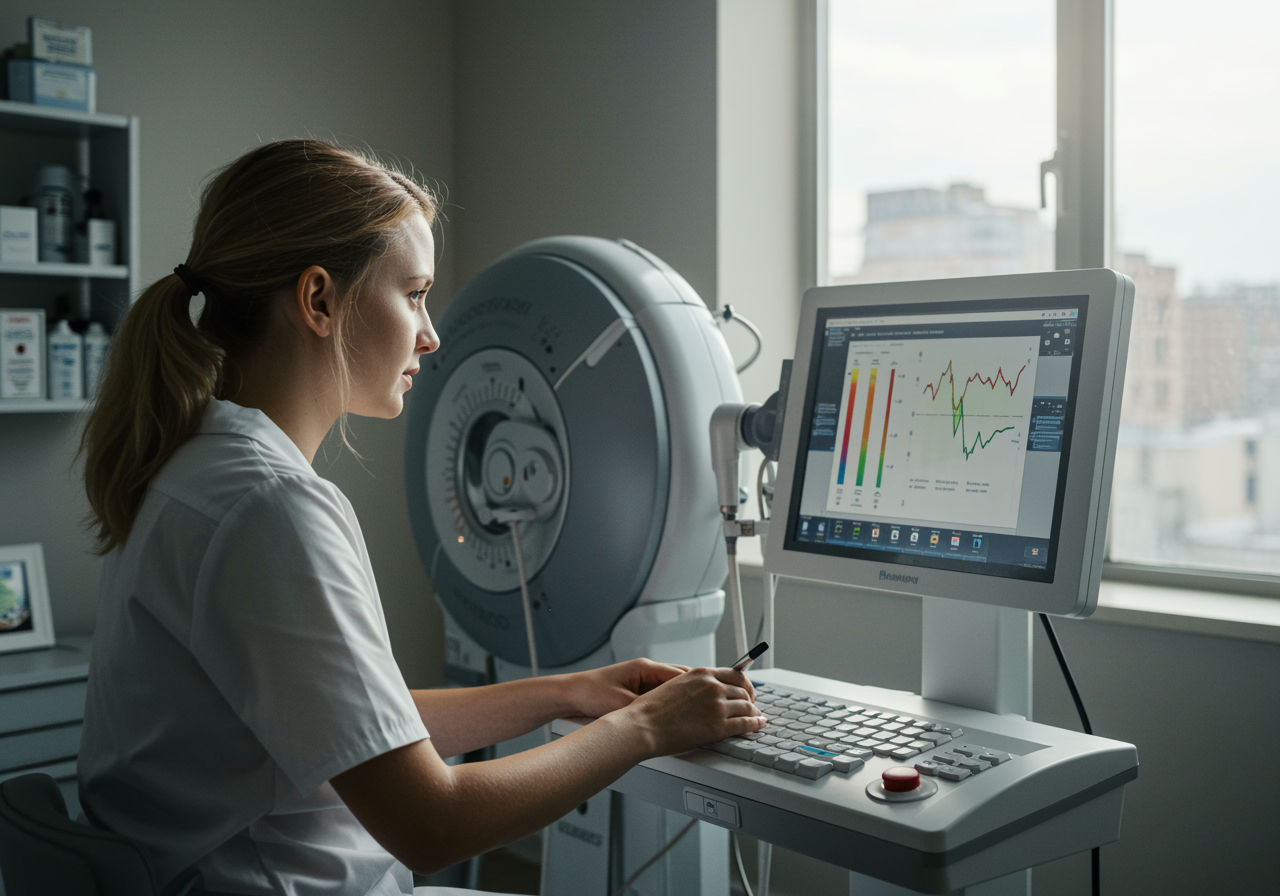
At ARKA Anugraha Hospital, ECP therapy is embedded within a comprehensive functional medicine framework led by Dr. Gaurang Ramesh. We recognize that angina is not merely a localized arterial blockage problem but a manifestation of systemic inflammation, oxidative stress, and metabolic dysfunction.
Conventional cardiology often focuses on what is wrong, the blockage visible on angiogram. Functional medicine asks why the blockage formed in the first place. This root cause approach identifies and addresses the upstream factors driving atherosclerosis and endothelial dysfunction.
The gut heart axis represents a crucial connection often overlooked in traditional cardiology. Emerging research documents that systemic inflammation frequently originates in the gut. Dysbiosis, an imbalance of gut bacteria, and increased intestinal permeability allow bacterial toxins called lipopolysaccharides to enter the bloodstream. This triggers chronic immune activation that damages the coronary endothelium, contributing directly to atherosclerosis progression.
Patients at ARKA undergo not just cardiac testing but functional evaluations that may include comprehensive stool analysis assessing gut microbiome composition and markers of intestinal inflammation. Food sensitivity testing identifies dietary triggers of immune activation. Based on these findings, personalized interventions may include targeted probiotics, prebiotic fiber, gut healing nutrients, and elimination diets addressing individual sensitivities.
Nutritional biochemistry enhances ECP’s arteriogenic effects. The therapy relies on the nitric oxide pathway, so providing your body with raw materials to produce nitric oxide amplifies results. We utilize the dietary nitrate to nitrite to nitric oxide pathway. Consuming inorganic nitrates found in vegetables like beetroot, arugula, and spinach allows oral bacteria to convert nitrate to nitrite, which stomach acid then converts into nitric oxide.
Our protocol recommends nitrate rich nutrition approximately 60 to 90 minutes before each ECP session. This timing ensures peak blood nitrite levels coincide with the high shear stress of treatment, maximizing nitric oxide production and collateral vessel opening. Beetroot juice has become a staple recommendation, with patients consuming 250 to 500 ml before sessions. Antioxidant rich foods including berries, pomegranate, and dark chocolate protect newly formed nitric oxide from degradation by free radicals.
Stress management addresses the autonomic nervous system dysregulation common in cardiac patients. Chronic stress activates the sympathetic fight or flight system, causing vasoconstriction and increasing cardiac workload. We teach specific breathing techniques patients practice during ECP sessions, creating states of deep physiological coherence that enhance parasympathetic rest and digest activity. Some patients benefit from non invasive vagus nerve stimulation devices that reset autonomic balance.
This integrative approach views ECP not as a standalone technical intervention but as a catalyst within a comprehensive healing ecosystem addressing the whole person rather than just the diseased artery.
What to Expect: The Patient Journey at ARKA
Understanding the practical aspects of ECP therapy helps reduce anxiety and ensures realistic expectations.
Before starting treatment, comprehensive evaluation determines candidacy. Ideal candidates include patients with stable angina Class II through IV, those with previous bypass or stenting who have recurring symptoms, patients with microvascular angina, individuals with heart failure of ischemic origin, and no option patients declined for further surgery. Detailed screening includes echocardiogram assessing heart valve function, vascular ultrasound checking for leg blood clots, review of arrhythmias, and blood pressure optimization.
The standard treatment course consists of 35 hours administered as one hour sessions five to six days weekly over six to seven weeks. Some patients prefer accelerated schedules with two sessions daily separated by several hours, completing the course in half the time. Research confirms comparable efficacy with either schedule.
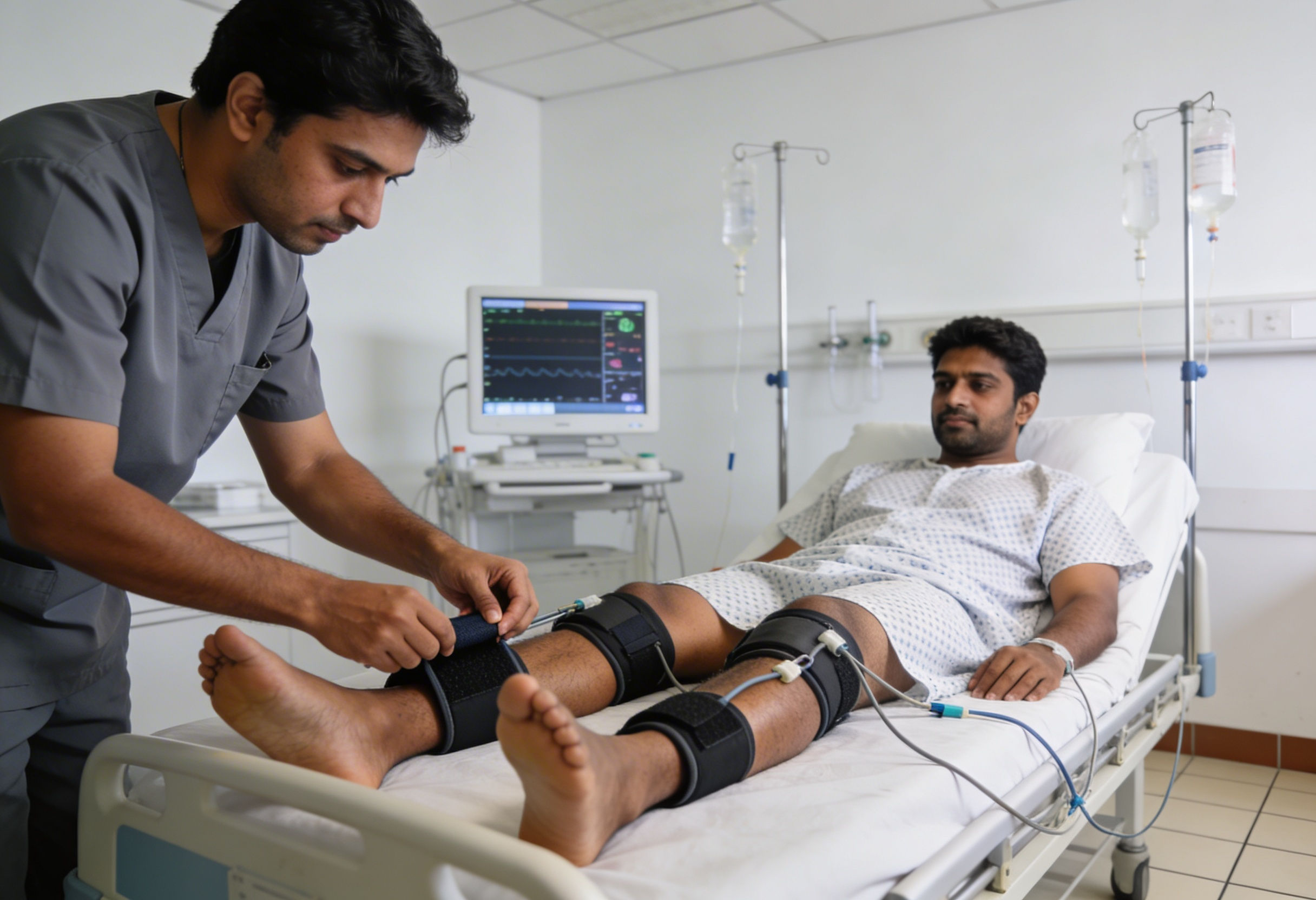
Each session begins with changing into tight fitting elastic pants preventing skin chafing. You lie comfortably on a treatment bed while three pneumatic cuffs wrap around your calves, thighs, and buttocks. ECG electrodes on your chest monitor heart rhythm with millisecond precision, allowing the computer to synchronize cuff inflation perfectly with your cardiac cycle.
When treatment begins, you feel firm rhythmic compression starting at your calves and moving up to your hips in waves. Most people describe this as vigorous massage or a strong hug. It should not be painful. The sensation initially feels unusual, but most patients adapt within the first session. The rhythm becomes soothing, with many patients reading, watching videos, listening to music, or napping during treatment.
Some patients experience mild fatigue during the first week, similar to starting a new exercise program. This training effect signals cardiovascular adaptation and typically resolves by week two. Skin irritation where cuffs contact skin occasionally occurs, managed with padding and proper clothing. Serious side effects are extraordinarily rare when patients are appropriately screened.
Improvement often follows a characteristic pattern. Some patients notice reduced angina frequency within the first few sessions as hemodynamic support provides immediate benefit. Most experience progressive improvement building over weeks as new collateral vessels mature. The most significant gains typically appear in the final weeks of treatment when cumulative vascular remodeling reaches functional capacity. Exercise tolerance improves measurably, with patients able to walk farther, climb more stairs, and perform activities that previously triggered chest pain.
Life After ECP: Maintaining Your Results
The benefits of ECP typically last three to five years for most patients, documented in registry data tracking thousands of individuals. However, atherosclerosis is a progressive disease, and lifestyle factors profoundly influence how long improvements persist.
Patients who adopt comprehensive lifestyle modifications sustain results longest. Continuing nitrate rich dietary patterns supports ongoing nitric oxide production. Regular moderate exercise within your improved capacity further conditions the cardiovascular system. Stress management techniques prevent sympathetic overdrive that constricts vessels. Smoking cessation is absolutely critical, as tobacco immediately reverses ECP’s endothelial benefits.
Some patients choose maintenance ECP sessions, typically 10 to 15 hours annually, to reinforce vascular health and extend benefit duration. This is particularly common for patients with ongoing risk factors difficult to fully control or those who experienced dramatic improvement they wish to preserve.
When symptoms gradually return after several years, repeat courses of ECP remain effective. The therapy can be safely repeated multiple times throughout your life as atherosclerosis progresses, providing a sustainable long term management strategy for chronic coronary disease.
For patients like Meera whose story opened this article, ECP transformed daily existence. She measures her life not in meters anymore but in experiences: morning walks with her husband, playing with grandchildren, returning to her temple community. The crushing fear that dominated her thoughts has lifted, replaced by confidence in her body’s restored capacity. Three years after completing treatment, she maintains her improvement through continued attention to diet, regular walking, and the knowledge that if needed, she can return for additional ECP sessions.
Your angina does not have to define your existence or force you into progressive isolation. When conventional revascularization has reached its limits, when your anatomy is unsuitable for stents or surgery, when chest pain continues despite optimal medications, ECP therapy offers evidence based hope. It harnesses your body’s remarkable capacity to heal itself, to grow the bypasses that surgeons cannot create, to restore the vitality that disease has stolen.
FREQUENTLY ASKED QUESTIONS
- What is refractory angina and how does ECP help when nothing else works? Refractory angina means chronic chest pain lasting more than three months despite optimal medications, previous stenting or bypass surgery, and no remaining options for further revascularization. ECP helps by using rhythmic leg compression synchronized with your heartbeat to increase coronary blood flow and trigger your body to grow new collateral blood vessels around blockages. This biological approach addresses diffuse disease and small vessel problems that mechanical procedures cannot fix.
- Can ECP treat microvascular angina when my angiogram looks normal? Yes, ECP is particularly effective for microvascular angina or coronary syndrome X where large coronary arteries appear normal but tiny resistance vessels cannot dilate properly. Since ECP increases shear stress throughout the entire arterial tree including microscopic vessels, it improves endothelial function systemically. Studies document significant improvements in coronary flow reserve, the key measure of microvascular health, following ECP treatment in these patients.
- How quickly will I notice reduction in my chest pain with ECP? Many patients experience some immediate relief during early sessions from the hemodynamic support ECP provides, but cumulative improvement builds over weeks. Most notice meaningful angina reduction by week three to four as new collateral vessels begin functioning. The most significant gains typically appear in the final weeks of the 35 hour course when vascular remodeling reaches full capacity. Improvement continues for weeks after completing treatment as vessels continue maturing.
- Why does ARKA combine ECP with functional medicine and what difference does it make? ARKA’s functional medicine approach addresses root causes of atherosclerosis including gut inflammation, nutritional deficiencies, and metabolic dysfunction that conventional cardiology often overlooks. We optimize your body’s terrain for healing through gut health assessment, anti inflammatory nutrition, and stress management. This enhances ECP’s effectiveness by ensuring your endothelium can respond robustly to the mechanical stimulus and supports long term maintenance of benefits.
- What foods should I eat to maximize ECP’s effectiveness for my angina? Focus on nitrate rich vegetables that your body converts into nitric oxide, the key vasodilator ECP stimulates. Beetroot, arugula, spinach, and leafy greens are excellent choices. We recommend consuming beetroot juice 60 to 90 minutes before each ECP session to maximize nitric oxide production during treatment. Include antioxidant rich foods like berries, pomegranate, and dark chocolate to protect nitric oxide from degradation. Avoid processed foods that promote inflammation.
- How long do ECP benefits last and what happens when angina gradually returns? Clinical registry data shows ECP benefits typically last three to five years for most patients. Duration depends significantly on lifestyle factors including diet, exercise, stress management, and smoking status. When symptoms gradually return, ECP can be safely repeated with similar effectiveness. Many patients choose maintenance sessions of 10 to 15 hours annually to extend benefit duration, creating a sustainable long term management strategy for chronic angina.
- Can I do ECP if I have had multiple stents or bypass surgery previously? Yes, previous revascularization procedures do not prevent ECP therapy. In fact, many ECP patients have already undergone one or more stenting procedures or bypass surgeries but continue experiencing angina. ECP addresses the progression of atherosclerosis and develops collateral circulation in areas previous procedures could not treat. The therapy complements rather than replaces mechanical revascularization, filling the gaps conventional procedures leave behind.
- Will my insurance cover ECP therapy for refractory angina? Many insurance plans including Medicare cover ECP for documented refractory angina when specific criteria are met, typically requiring failed optimal medical therapy and unsuitability for further revascularization procedures. Coverage for other indications like microvascular angina varies by insurer. Our billing specialists at ARKA Anugraha Hospital verify your specific coverage, assist with prior authorization documentation, and explain out of pocket costs before you commit to treatment.
Explore Arka Recipes
Discover recipes that blend taste with health, crafted by our experts for your well-being.

Arka Diagnostics
Discover groundbreaking diagnostic services exclusive to India, now available at Arka Health, Bangalore