
Prolozone Therapy for Sciatica: Healing Nerve Pain When Epidurals and Surgery Loom

Reviewed by Dr. Gaurang Ramesh
MBBS, MS, FSGE, Surgical Gastroenterologist and Integrative & Functional Medicine Practitioner
Arka Anugraha Hospital, JP Nagar, Bangalore

Anjali’s sciatica began with a sharp lightning bolt down her right leg while bending to pick up her two year old daughter. The 38 year old marketing professional from Bangalore initially dismissed it as a pulled muscle. Within weeks, the intermittent jolt transformed into constant burning pain radiating from her lower back through her buttock down to her foot. Sitting through work meetings became torture. Driving was agony. Nights brought no relief as any position triggered electric shocks down her leg.
Her MRI showed a moderately herniated L5 S1 disc with nerve root contact. Her orthopedist recommended epidural steroid injections. The first injection provided miraculous two month relief before pain returned with vengeance. A second epidural gave only three weeks of improvement. Her doctor explained the next steps: either accept chronic pain management with stronger medications or consider microdiscectomy surgery. At 38 with a young child, Anjali faced either long term pharmaceutical dependence or spinal surgery with uncertain outcomes and months of recovery.
When Anjali discovered Prolozone therapy at ARKA Anugraha Hospital, she learned something transformative: her leg pain was not caused solely by the disc pressing on her nerve but by the disc material chemically burning her nerve root. This chemical radiculitis invisible on MRI scans creates inflammation no amount of mechanical decompression can fix. Additionally, her nerve tissue was oxygen starved and metabolically failing, unable to heal itself.
After four Prolozone sessions over seven weeks, Anjali’s transformation was remarkable. The burning leg pain disappeared completely. She could sit comfortably through full workdays, lift her daughter without fear, drive without agony, and sleep peacefully. Two years later, she remains pain free having avoided surgery. Her nerve genuinely healed at the cellular level rather than just having symptoms temporarily suppressed.

Why Your Sciatica Is a Chemical Burn Not Just Mechanical Pressure
Understanding why Prolozone succeeds for sciatica requires recognizing a critical truth conventional medicine often misses: radiating leg pain stems more from chemical inflammation than mechanical compression. This distinction explains why so many patients with massive disc herniations on MRI experience zero pain while others with minor bulges suffer debilitating agony.
Your sciatic nerve forms from nerve roots exiting the spine at L4, L5, S1, S2, and S3 levels. These roots coalesce into a massive nerve bundle approximately thumb width that travels through your pelvis beneath the piriformis muscle down your leg. When a disc herniates, the prevailing medical assumption suggests the protruding disc material mechanically squeezes your nerve causing pain. However, this plumbing model fails to explain the clinical reality.
Chemical radiculitis represents the hidden mechanism driving most sciatica pain. The nucleus pulposus, the gel like center of your disc, is immunologically privileged tissue. Because it remains contained within the disc from birth lacking blood supply, your immune system never recognizes it as part of your body. When an annular tear occurs and nucleus pulposus material leaks onto your nerve root, your immune system attacks it as a foreign invader.
This leaked disc material contains extraordinarily high concentrations of inflammatory mediators including phospholipase A2, prostaglandin E2, and tumor necrosis factor alpha. Phospholipase A2 is particularly devastating as the rate limiting enzyme in inflammatory cascades. When it bathes your nerve root, it initiates a chemical burn creating intraneural edema and hyperexcitability where your nerve generates ectopic pain discharges even without mechanical pressure.
Research confirms that applying nucleus pulposus material to a nerve root induces functional and structural abnormalities even without mechanical compression. This creates a state where your nerve fires pain signals continuously independent of physical pressure. This chemical assault is why surgical removal of the herniation may not resolve inflammation if the nerve remains chemically irritated.
Related service: Advanced sciatica evaluation at ARKA Anugraha Hospital determines whether your leg pain stems from mechanical compression or chemical radiculitis requiring different treatment approaches.
The Nerve Specific Energy Crisis Perpetuating Your Pain
Beyond chemical inflammation, sciatica involves a unique nerve specific energy crisis perpetuating chronic pain. Nerve roots have precarious blood supply through tiny vessels called vasa nervorum highly susceptible to compression. When inflammation causes edema swelling within your nerve sheath, pressure inside rises collapsing these delicate vessels.
The immediate consequence is ischemia, blood supply restriction leading to tissue hypoxia. Nerves are metabolically expensive tissues requiring constant high ATP levels to maintain ion pumps regulating electrical signaling. Under hypoxic conditions, mitochondrial respiration fails. Cells switch to anaerobic glycolysis, a highly inefficient energy production method generating lactate and hydrogen ions as byproducts.
This metabolic waste accumulation lowers local pH creating acidic environments. Acid sensing ion channels on pain receptors activate from this acidity, amplifying pain signals dramatically. A vicious cycle emerges: inflammation causes edema, edema causes hypoxia, hypoxia causes acidity and energy failure, and energy failure prevents cells from healing or repolarizing, leading to chronic unrelenting pain.
Standard epidural steroids may reduce inflammation temporarily but do nothing to restore cellular respiration or resolve the energy crisis. The nerve remains metabolically crippled unable to repair itself. Prolozone uniquely breaks this cycle by delivering the one substrate your starving nerve tissue desperately needs: oxygen combined with metabolic fuel to restart energy production.
Read next: Understanding how nerve metabolism affects sciatica healing at ARKA Anugraha Hospital.
How Prolozone Addresses What Epidurals Cannot
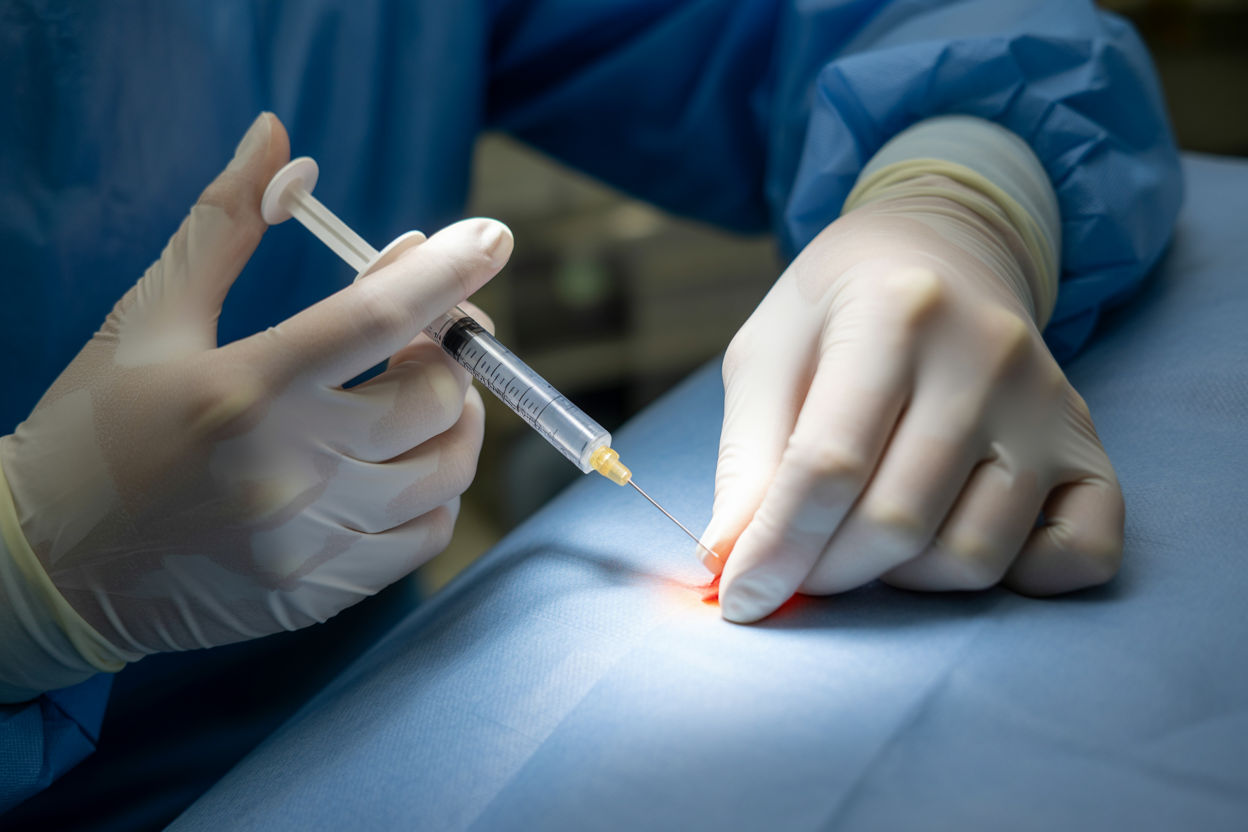
Prolozone therapy succeeds for sciatica by simultaneously addressing chemical inflammation, oxygen deprivation, and nerve energy failure. The treatment uses a precise two phase injection protocol developed by Dr. Frank Shallenberger specifically targeting nerve pathology conventional treatments miss.
The liquid conditioning phase contains procaine providing immediate anesthetic relief while performing a critical neural therapy function. Procaine repolarizes damaged nerve cell membranes that have become chronically depolarized. Painful injured nerves lose proper electrical potential; procaine resets this voltage restoring normal nerve function. Additionally, procaine acts as vasodilator opening constricted blood vessels around your nerve. B vitamins support nerve sheath repair and myelin synthesis critical for radiculopathy recovery. Dextrose provides immediate fuel for energy starved cells while sodium bicarbonate neutralizes the acidic environment described earlier.
The ozone gas phase delivers the regenerative catalyst. Medical ozone immediately reacts with biological fluids generating messenger molecules triggering healing cascades. For sciatic nerve pathology, several mechanisms are critical. Ozone stimulates red blood cells to increase 2,3 diphosphoglycerate, shifting hemoglobin’s oxygen release curve so blood dumps oxygen more readily into hypoxic nerve tissue. Even with compromised blood flow, arriving blood delivers dramatically more oxygen to starving nerves.
The mitochondrial restoration allows energy production to surge. With renewed ATP, nerve cells can repair myelin sheaths and restore ion pump function necessary for proper electrical signaling. The Nrf2 antioxidant pathway activation provides protective effects as oxidative stress damages nerves in sciatica. Growth factor release recruits repair cells to the inflamed nerve root.
Chemonucleolysis represents ozone’s unique disc shrinking effect. The nucleus pulposus consists largely of proteoglycans attracting and holding water. Ozone reacts with these proteoglycans, breaking them down and reducing water holding capacity. This causes the herniated disc portion to dehydrate and shrink over time, physically reducing pressure on your nerve root without surgery. Imaging studies document 82 percent of patients show measurable herniation volume reduction after ozone treatment.
Why Epidural Steroids Provide Diminishing Returns
Understanding epidural steroid injection limitations reveals why patients turn to regenerative alternatives. Epidurals remain standard care for sciatica, but their mechanism creates fundamental problems for nerve healing.
Corticosteroids powerfully suppress immune activity providing rapid initial relief. However, steroids are catabolic tissue breakdown agents. They turn off repair processes to stop pain signals. While inflammation reduces temporarily, the chemical radiculitis and nerve energy crisis remain unaddressed. The nerve lacks metabolic capacity to heal itself even after inflammation subsides.
The pattern is predictable. First epidural provides months of relief. Second gives weeks. Third may fail entirely because underlying nerve pathology worsens while symptoms are masked. Repeated steroids can weaken spinal ligaments, thin bone density, and suppress immune function. You borrow from your nerve’s future health to pay for temporary present comfort.
Prolozone represents the opposite philosophy. Rather than suppressing while tissue degenerates, it resolves inflammation while stimulating genuine nerve repair. Yes, relief develops more gradually over weeks rather than days. But improvement reflects structural nerve healing that continues strengthening long after treatment ends.
The Unique Prolozone Experience for Sciatica

Patients often ask what to expect during sciatica Prolozone treatment. The procedure is outpatient, typically using ultrasound guidance to target paravertebral muscles, facet joints, or sacroiliac regions associated with sciatic nerve roots.
After skin preparation and local anesthetic, the liquid nutritional solution is injected. Procaine provides immediate anesthetic effect often giving instant relief. The distinctive part comes with ozone gas injection. Patients feel pressure or fullness as gas enters tissue. If gas tracks along the nerve sheath, you may feel temporary warmth or even mild replication of your sciatic symptoms traveling down your leg.
This sensation, while disconcerting, is actually a positive sign indicating the gas has reached target pathology. The ozone is following your nerve pathway delivering oxygen directly where needed. This temporary leg sensation resolves quickly as gas absorbs into tissue.
Unlike epidurals requiring rest, Prolozone patients are encouraged toward gentle movement. Walking and light stretching help ozone gas diffuse through tissues enhancing oxygen delivery. Most patients experience mild healing soreness for 24 to 48 hours representing the regenerative cascade initiating. A typical protocol involves three to five sessions spaced one to two weeks apart with cumulative benefit building across treatments.
The ARKA Integrative Sciatica Protocol
At ARKA Anugraha Hospital, Prolozone therapy is embedded within comprehensive care recognizing sciatica rarely exists in isolation. Under Dr. Gaurang Ramesh’s functional medicine guidance, the approach addresses systemic factors influencing nerve healing capacity.
The gut brain axis connection affects chronic pain profoundly. Gut dysbiosis causes leaky gut where bacterial endotoxins enter bloodstream activating glial cells in your spinal cord. Activated glial cells release inflammatory mediators sensitizing neurons, creating central sensitization where your brain amplifies pain signals. Patients with sciatica and concurrent digestive issues may require gut restoration alongside Prolozone injections. Without fixing gut inflammation, your nervous system remains in high alert blunting treatment effects.
Metabolic optimization addresses the inflammatory environment. Metabolic syndrome, insulin resistance, and obesity create systemic inflammation through adipokines lowering pain thresholds. A minor disc bulge asymptomatic in metabolically healthy individuals causes severe pain in patients with metabolic dysfunction. Prolozone works most effectively when paired with metabolic correction reducing the inflammatory background noise that amplifies nerve sensitivity.
Nutritional support provides raw materials for nerve regeneration. Magnesium stabilizes nerve membranes and relaxes spastic muscles. Curcumin naturally inhibits tumor necrosis factor alpha, the primary chemical radiculitis driver. Omega 3 fatty acids produce resolvins that actively resolve rather than just suppress inflammation. B vitamins support myelin synthesis and neurotransmitter production.
Rehabilitation through nerve flossing exercises helps your sciatic nerve glide smoothly through the piriformis and spinal canals after inflammation resolves. Core stabilization strengthens the internal corset protecting vertebrae from shear forces preventing recurrence.
For patients like Anjali whose story opened this article, ARKA’s integrative approach provided what conventional care could not: genuine nerve healing addressing chemical inflammation, energy crisis, and metabolic dysfunction rather than temporary symptom suppression awaiting inevitable surgery.
Your sciatica does not have to mean accepting chronic pain or facing surgery. When epidurals fail to address chemical radiculitis and nerve energy failure, Prolozone therapy offers evidence based hope for restoring pain free function and preserving your spine.

FREQUENTLY ASKED QUESTIONS
- What is chemical radiculitis and how does it cause my sciatica pain? Chemical radiculitis describes nerve root inflammation caused by leaked disc material chemically irritating your sciatic nerve rather than mechanically compressing it. When your disc tears, the inner nucleus pulposus contacts your nerve root triggering violent autoimmune response. This material contains phospholipase A2 creating a chemical burn with intraneural edema and hyperexcitability. Your nerve generates ectopic pain discharges independent of mechanical pressure. Research confirms nucleus pulposus application induces functional nerve abnormalities without compression. This explains why patients with massive herniations have no pain while others with minor bulges suffer debilitating agony. Prolozone specifically neutralizes these inflammatory compounds while epidurals only temporarily suppress symptoms.
- How does Prolozone help shrink my herniated disc causing sciatica? Prolozone induces chemonucleolysis where ozone causes herniated disc portions to dehydrate and shrink. The nucleus pulposus consists largely of proteoglycans attracting and holding water. Ozone reacts with these proteoglycans breaking them down and reducing water holding capacity. This causes the herniation to mummify over time, physically reducing pressure on your nerve root without surgical removal. Imaging studies document 82 percent of patients show measurable herniation volume reduction after ozone treatment correlating with 68 percent positive clinical response. While not removing the disc like surgery, this shrinkage resolves symptoms and allows natural healing. The process is gradual building over weeks as oxidative dehydration progresses.
- Why do epidural steroid injections provide temporary sciatica relief with diminishing returns? Epidural steroids suppress immune activity providing rapid initial relief but are catabolic tissue breakdown agents that turn off repair processes. While inflammation reduces temporarily, the chemical radiculitis and nerve energy crisis remain unaddressed. Your nerve lacks metabolic capacity to heal itself even after inflammation subsides. The predictable pattern shows first epidural providing months relief, second giving weeks, third failing entirely as underlying nerve pathology worsens while symptoms are masked. Repeated steroids weaken spinal ligaments, thin bone density, and suppress immune function. You borrow from nerve future health for temporary present comfort. Prolozone resolves inflammation while stimulating genuine nerve repair producing lasting structural healing.
- What causes the nerve specific energy crisis perpetuating my chronic sciatica? Nerve roots have precarious blood supply through vasa nervorum highly susceptible to compression. When inflammation causes intraneural edema, pressure inside nerve sheath rises collapsing these delicate vessels creating ischemia and tissue hypoxia. Nerves require constant high ATP for ion pumps regulating electrical signaling. Under hypoxia, mitochondrial respiration fails forcing cells to switch to anaerobic glycolysis generating lactate and hydrogen ions. This metabolic waste lowers pH creating acidic environments activating acid sensing ion channels on pain receptors amplifying signals. The vicious cycle where inflammation causes hypoxia, hypoxia causes acidity and energy failure, and energy failure prevents healing leads to chronic unrelenting pain standard treatments cannot break.
- What does the gas tracking sensation mean during my Prolozone sciatica treatment? When ozone gas is injected, if it tracks along your nerve sheath you may feel temporary warmth or mild replication of sciatic symptoms traveling down your leg. While disconcerting, this is actually a positive sign indicating gas has reached target pathology. The ozone is following your nerve pathway delivering oxygen directly where needed most. This temporary leg sensation resolves quickly as gas absorbs into tissue. Many practitioners consider this confirmation of proper treatment delivery. The sensation differs from your chronic pain, typically described as warm pressure rather than sharp burning. Patients experiencing this often have better outcomes as it confirms the therapeutic agent reached the inflamed nerve root.
- How many Prolozone sessions does chronic sciatica typically require? Most chronic sciatica requires three to five Prolozone sessions spaced one to two weeks apart. This interval allows cellular response to peak before next stimulation with benefits building cumulatively as nerve healing progresses. Some patients experience meaningful relief after just one session due to immediate anti inflammatory effects and nerve repolarization from procaine. True nerve regeneration develops progressively with significant lasting improvement typically noted after third session as structural remodeling occurs. Severe chemical radiculitis or patients with metabolic syndrome may require the full five session course. Success improves when combined with metabolic optimization, gut health restoration, and nutritional support for nerve regeneration.
- Why does ARKA address gut health when treating my sciatica? The gut brain axis profoundly influences chronic pain. Gut dysbiosis causes leaky gut where bacterial endotoxins specifically lipopolysaccharides enter bloodstream activating glial cells in your spinal cord. Activated glial cells release inflammatory mediators sensitizing neurons creating central sensitization where your brain amplifies pain signals. Patients with sciatica and concurrent digestive issues like bloating or IBS may require gut restoration with probiotics, prebiotic fiber, and dietary modifications alongside Prolozone injections. Without fixing gut inflammation, your nervous system remains in high alert potentially blunting pain relief effects. At ARKA Anugraha Hospital under Dr. Gaurang Ramesh’s guidance, concurrent gut treatment stops this inflammatory flow at its source creating conditions for nerve healing.
- Can Prolozone help if my sciatica failed to improve after epidural steroid injections? Yes, Prolozone offers significant hope for patients who failed epidural steroids precisely because it addresses what epidurals cannot: chemical radiculitis, nerve energy crisis, and metabolic dysfunction. Epidurals only temporarily suppress inflammation without restoring nerve cellular respiration or resolving the underlying chemical burn from leaked disc material. Clinical studies show ozone therapy superior to steroids with 74.4 percent achieving excellent or good outcomes compared to only 47.3 percent with steroids. If your first epidural provided months of relief but subsequent injections gave diminishing returns, this pattern indicates your nerve needs regenerative repair not repeated suppression. Prolozone’s chemonucleolysis effect, nerve repolarization through procaine, and oxygen restoration provide mechanisms epidurals lack entirely.
Explore Arka Recipes
Discover recipes that blend taste with health, crafted by our experts for your well-being.

Arka Diagnostics
Discover groundbreaking diagnostic services exclusive to India, now available at Arka Health, Bangalore