
Prolozone Therapy for Knee Osteoarthritis: A Regenerative Path to Pain Free Living

Reviewed by Dr. Gaurang Ramesh
MBBS, MS, FSGE, Surgical Gastroenterologist and Integrative & Functional Medicine Practitioner
Arka Anugraha Hospital, JP Nagar, Bangalore

When Rajesh first walked into the consultation room at ARKA Anugraha Hospital, his frustration was palpable. At 58 years old, this former marathon runner could barely climb a flight of stairs without wincing. His knee pain had become a constant companion, limiting not just his morning jogs but simple pleasures like playing with his grandchildren or walking through the neighborhood market. Like many people facing chronic knee osteoarthritis, Rajesh found himself caught between two unsatisfying choices: continue taking painkillers that offered temporary relief but no real healing, or consider knee replacement surgery that felt too drastic for someone who still wanted an active life.
This story reflects a challenge thousands of people face every day. Knee osteoarthritis affects millions globally, and for years, the medical world offered a limited playbook. You could mask the pain with medications, get temporary relief from cortisone shots, or eventually surrender to joint replacement surgery. But what if there was another path? What if your body could be guided to heal itself, to restore function and reduce pain without going under the knife?
This is where prolozone therapy enters the picture, a regenerative treatment that is changing how we think about knee pain and joint health. At ARKA Anugraha Hospital, this innovative approach is not just about injecting medicine into your knee. It represents a complete reimagining of joint care, one that views your body as an interconnected system where healing the knee often means addressing your metabolism, your gut health, and your overall inflammatory state.
Understanding What Really Happens in Your Knee

Before we explore how prolozone therapy works, it helps to understand what actually goes wrong inside an arthritic knee. Most people think of osteoarthritis as simple wear and tear, like tires gradually losing their tread. The reality is far more complex and, importantly, far more treatable.
Your knee joint is a remarkable piece of engineering. The ends of your bones are covered with smooth, slippery cartilage that allows them to glide effortlessly against each other. This cartilage is maintained by specialized cells called chondrocytes, which constantly repair and rebuild the tissue. Think of them as tiny maintenance workers, always patching and refreshing the surface.
In a healthy knee, these cells maintain perfect balance. They produce just enough new cartilage to replace what gets worn down through daily use. The joint is bathed in synovial fluid, a remarkable lubricant that both nourishes the cartilage and cushions every step you take.
But osteoarthritis disrupts this harmony. The chondrocytes become stressed and start behaving differently. Instead of making cartilage, they begin releasing inflammatory chemicals with names like interleukin and tumor necrosis factor. These chemicals trigger destructive enzymes that break down the very cartilage the cells are supposed to protect. The synovial membrane lining the joint becomes inflamed and swollen, adding more inflammatory molecules to the mix. The result is a vicious cycle where inflammation begets more inflammation, and the joint environment becomes increasingly hostile to healing.
What makes this particularly frustrating is that cartilage has no blood supply. Unlike a cut on your skin that heals naturally because blood brings oxygen and nutrients to the wound, cartilage depends entirely on the synovial fluid for nutrition. When that fluid becomes a soup of inflammatory chemicals rather than a healing broth, the cartilage has no way to recover.
The Hidden Connection Between Your Gut and Your Knees
Here is where the ARKA Anugraha Hospital approach becomes truly distinctive. While conventional orthopedics focuses solely on the knee joint itself, functional medicine recognizes something remarkable: your gut health directly influences your joint health.
Your digestive system houses trillions of bacteria, fungi, and other microorganisms collectively known as your microbiome. When this microbial community is balanced and healthy, it supports your immune system and helps control inflammation throughout your body. But when the balance tips, a condition called dysbiosis, problems cascade far beyond your digestive tract.
A disrupted gut lining can become permeable, allowing bacterial fragments called lipopolysaccharides to slip through into your bloodstream. These fragments are essentially toxins, and they travel through your circulation to distant sites, including the fluid inside your knee joint. Once there, they trigger inflammatory reactions that accelerate cartilage breakdown and intensify pain.
This connection, often called the gut joint axis, explains why two people with identical knee X-rays can have completely different pain levels. The person with better gut health and lower systemic inflammation may have minimal discomfort, while someone with gut dysbiosis experiences severe pain despite similar structural damage.
Understanding this relationship transforms treatment. At ARKA Anugraha Hospital, addressing knee osteoarthritis means looking at the whole person. It means asking about digestion, diet, and metabolic health, not just examining the knee. This integrative perspective is what sets apart truly regenerative care from merely symptomatic treatment.
What Makes Prolozone Therapy Different
Prolozone therapy represents a fusion of two powerful healing modalities: prolotherapy and ozone therapy. To understand its unique power, we need to explore each component.
Traditional prolotherapy involves injecting substances that create controlled inflammation in damaged tissues. This inflammation jump starts the healing process, calling repair cells to the area and stimulating new tissue growth. The challenge with traditional prolotherapy is that creating inflammation in an already inflamed arthritic joint can be uncomfortable and sometimes counterproductive.
Ozone therapy takes a completely different approach. Medical grade ozone is a specialized form of oxygen, created by passing pure oxygen through an electrical field. When introduced into tissues, ozone creates what scientists call oxidative preconditioning. This sounds technical, but the concept is elegantly simple.
Your cells contain tiny power plants called mitochondria that produce the energy your body needs to function. In osteoarthritis, these mitochondria often become sluggish and inefficient. They struggle to produce enough energy, which means the chondrocytes cannot maintain the cartilage properly. The joint environment also becomes oxygen poor, a state called hypoxia, which further suppresses healing.
Ozone therapy addresses both problems simultaneously. When ozone enters your knee, it immediately reacts with the fluids and tissues to create signaling molecules. These molecules act like wake up calls to your cells, telling them to ramp up energy production and activate their antioxidant defense systems.
One of the most powerful effects involves a protein called Nrf2. Under normal circumstances, Nrf2 sits quietly in your cells doing nothing. But when ozone derived signals reach it, Nrf2 springs into action, moving into the cell nucleus and turning on hundreds of protective genes. These genes produce powerful antioxidants that neutralize the oxidative stress damaging your cartilage.
This might seem paradoxical. How can ozone, which creates oxidative stress, also increase antioxidants? The answer lies in the dose. A small, controlled amount of oxidative stress triggers a massive defensive response, much like how exercise creates temporary stress that makes you stronger over time. This principle, called hormesis, is fundamental to how prolozone therapy heals joints.
The Prolozone Treatment Experience
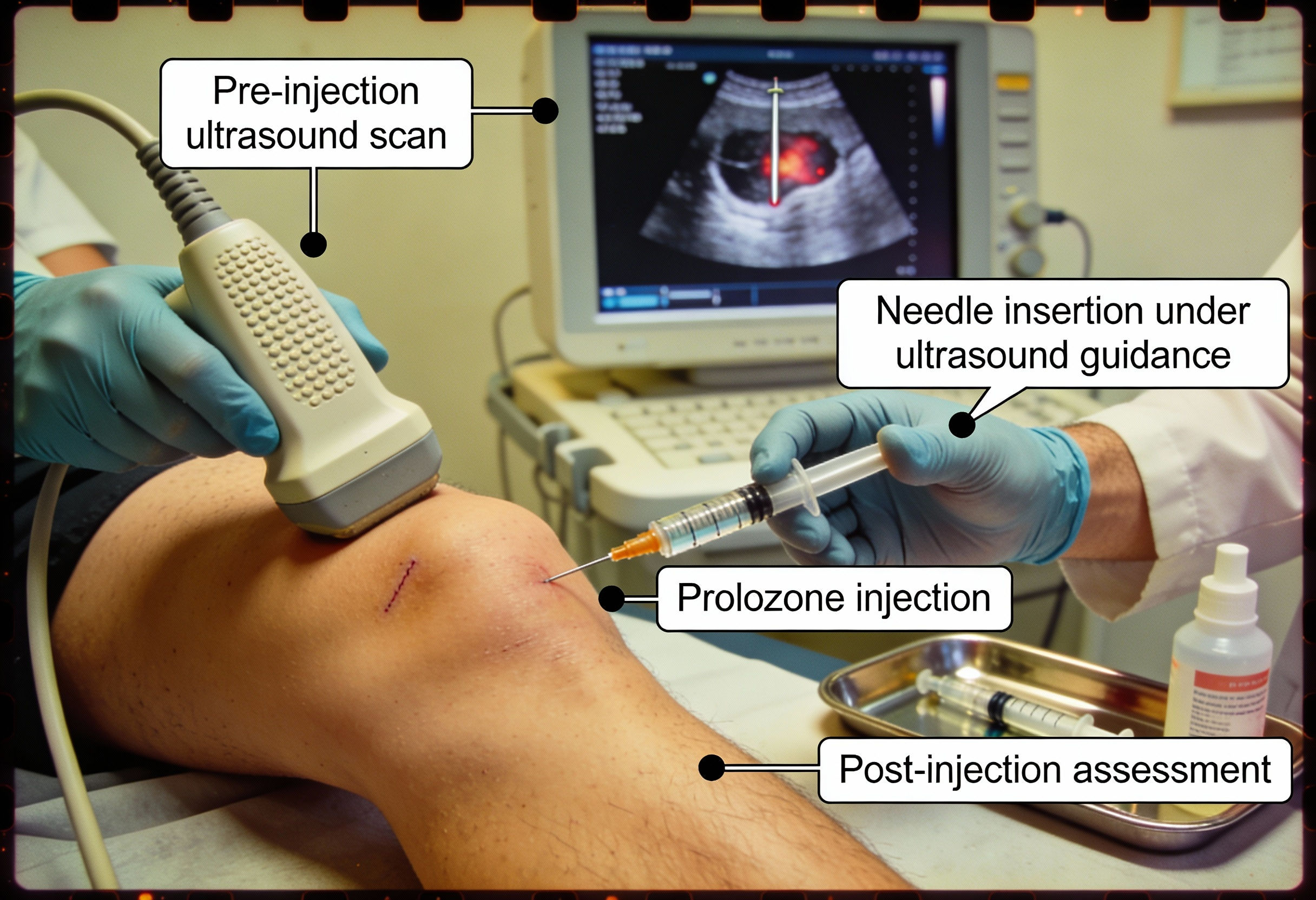
Understanding what happens during a prolozone session helps demystify the process. Many patients arrive nervous, having heard about painful cortisone shots or intensive prolotherapy treatments. The reality is typically far more comfortable.
Your physician begins by carefully cleaning the skin over your knee with antiseptic solution. Using ultrasound guidance or anatomical landmarks, they identify the precise injection sites. The procedure involves two distinct steps, both performed during the same visit.
First comes the liquid phase. Your doctor injects a carefully formulated solution containing local anesthetic, vitamins, and natural anti inflammatory agents directly into the joint and surrounding structures. The procaine or lidocaine in this solution numbs the area immediately, making the rest of the treatment comfortable. The B vitamins and other nutrients provide raw materials your cells need for repair. Some practitioners include small amounts of dextrose to give cells immediate energy.
Think of this first injection as preparing the soil before planting seeds. You are creating an optimal environment for healing to occur.
The second phase involves injecting medical grade ozone gas. This might sound unusual, but the sensation is typically described as pressure or fullness rather than pain. The ozone diffuses throughout the joint space, penetrating the synovial fluid, reaching the cartilage surfaces, and bathing the inflamed synovial membrane.
The entire procedure usually takes 15 to 20 minutes. Unlike cortisone injections that require you to rest afterward, you can typically walk out and resume normal activities immediately. Many patients describe feeling a sense of warmth or energy in the treated knee as the ozone begins its work.
Why the ARKA Anugraha Approach Delivers Better Results
What happens after your prolozone injection is just as important as the injection itself. This is where the integrative model at ARKA Anugraha Hospital truly shines.
Most clinics stop at the injection. You get your treatment, schedule your next appointment, and that is it. But research shows that joint healing happens within the context of your whole body metabolism. If your system is inflamed, if your blood sugar is poorly controlled, if your gut is leaking toxins into your bloodstream, even the best injection therapy will have limited effectiveness.
At ARKA Anugraha Hospital, your treatment plan addresses these foundational issues. If metabolic testing reveals insulin resistance or prediabetes, you receive guidance on dietary changes and lifestyle modifications that reduce systemic inflammation. High blood sugar not only promotes inflammation but also creates compounds called advanced glycation end products that stiffen your cartilage and make it brittle.
The gut health component deserves special attention. Many patients are surprised when their orthopedic treatment includes discussion of digestive function and recommendations for specific probiotics or dietary changes. But this makes perfect sense when you understand the gut joint axis. By healing your intestinal barrier and rebalancing your microbiome, you cut off the supply of inflammatory triggers reaching your knee. The prolozone can then work more effectively and its benefits last longer.
Physical rehabilitation forms another crucial pillar. Cartilage is unique tissue that depends on movement for nutrition. When you walk or gently exercise, you pump fresh synovial fluid in and out of the cartilage, delivering nutrients and removing waste products. But the exercise must be appropriate. High impact activities can damage healing tissue, while complete rest starves the cartilage of the mechanical stimulation it needs.
Your care team will design a specific movement protocol, often emphasizing low impact activities like swimming, cycling, or tai chi that maintain joint mobility without excessive stress. Strengthening the muscles around your knee, particularly your quadriceps and hamstrings, helps stabilize the joint and reduces the load on your cartilage.
Related service: Functional Gut Health Program at ARKA Anugraha Hospital provides comprehensive assessment and treatment of digestive imbalances that may be contributing to your joint inflammation.
How Prolozone Compares to Other Treatments
When considering prolozone therapy, patients naturally want to know how it stacks up against other options. Each treatment has its place, and understanding the differences helps you make informed decisions.
Cortisone injections provide rapid, powerful pain relief by shutting down inflammation at a molecular level. For someone having an acute flare up of arthritis, cortisone can be a godsend. However, cortisone is fundamentally catabolic, meaning it breaks down tissue. It suppresses your immune system and inhibits the production of collagen and other structural proteins. Studies show that repeated cortisone injections can accelerate cartilage loss over time. Cortisone treats the symptom but worsens the underlying disease.
Prolozone takes the opposite approach. It is anabolic and regenerative, stimulating energy production and tissue repair. While you might not get the instant dramatic relief of cortisone, the healing it promotes is genuine and lasting.
Hyaluronic acid injections, sometimes called viscosupplementation, work by supplementing the natural lubricant in your joint. Think of it like adding fresh oil to a squeaky hinge. For people with mild to moderate arthritis whose joints have become dry, hyaluronic acid can provide several months of improved comfort and function. However, it does not address the inflammatory process driving cartilage loss.
Interestingly, research suggests that combining ozone therapy with hyaluronic acid may produce superior results. The ozone first reduces inflammation and prepares the joint environment, allowing the hyaluronic acid to work more effectively and last longer. Some practitioners at ARKA Anugraha Hospital use this sequential approach for specific cases.
Platelet rich plasma, or PRP therapy, involves drawing your blood, concentrating the platelets, and injecting them into your joint. Platelets contain numerous growth factors that stimulate tissue healing. PRP is genuinely regenerative and has strong evidence supporting its use in osteoarthritis. The main limitations are cost and the fact that healing takes time, often weeks to months before maximum benefit appears.
Prolozone offers faster onset of relief than PRP while still promoting actual healing. Some clinics are exploring protocols that combine both, using ozone to reduce inflammation and optimize the joint environment, followed by PRP to deliver concentrated growth factors.
Read next: Understanding your treatment options for chronic joint pain at ARKA Anugraha Hospital.

Who Benefits Most from Prolozone Therapy
Not everyone with knee pain is an ideal candidate for prolozone therapy, and honest assessment is essential. This treatment works best for specific patient profiles.
People in the early to moderate stages of osteoarthritis, typically classified as grade 1 through 3 on X-ray, often respond beautifully. At these stages, significant cartilage remains, and the inflammatory environment can be reversed before permanent damage sets in. For these patients, prolozone may genuinely slow or halt disease progression while eliminating pain.
Individuals with metabolic osteoarthritis, where systemic inflammation and metabolic dysfunction drive the joint disease, are particularly good candidates for the ARKA Anugraha integrative approach. When you combine prolozone injections with metabolic optimization and gut health restoration, you address both the local joint problem and the systemic triggers perpetuating it.
Patients seeking to avoid or delay knee replacement surgery often find prolozone transformative. If you are in your fifties or early sixties and facing the prospect of surgery, buying five or ten years of comfortable, functional life with your natural knee has tremendous value. Even if you eventually need surgery, you will be older and potentially facing the operation in better overall health.
Younger active people who developed post traumatic arthritis after an injury also respond well. For someone whose knee never fully healed after a sports injury or accident, prolozone can help complete the healing process that stalled.
However, realistic expectations matter. If your knee is bone on bone with no cartilage remaining, prolozone cannot magically grow new cartilage. But even in advanced cases, many patients experience significant pain reduction because much of the discomfort comes from inflammation rather than bone contact. By calming the chemical environment, prolozone can dramatically improve quality of life even when structural damage is severe.
The Treatment Timeline and What to Expect
Understanding the typical treatment course helps you plan and maintain realistic expectations. Prolozone therapy is not a one time miracle cure but rather a course of treatments that progressively heal your joint.
Most protocols involve three to five treatment sessions spaced one to two weeks apart. This interval is important because it allows each treatment to trigger its biological response before the next stimulus is applied. Think of it like training for a marathon. You don’t run 26 miles on day one. You stress the system appropriately, allow recovery and adaptation, then stress it again progressively.
Some patients notice improvement after the first injection, particularly in pain levels. The local anesthetic provides immediate relief, and many people report feeling less stiffness and more mobility within days as the ozone begins reducing inflammation. However, the deeper regenerative effects take longer.
By the third or fourth treatment, most people experience substantial improvement. Pain during activities decreases, stiffness upon waking diminishes, and function improves. You might notice you can walk farther, climb stairs more easily, or return to activities you had abandoned.
After completing the initial series, maintenance injections every three to six months help sustain the benefits, especially for people with ongoing metabolic or inflammatory drivers of arthritis. This maintenance approach prevents regression and keeps your joint environment optimized.
During the treatment course, you should avoid taking anti inflammatory medications like ibuprofen or naproxen. While this might seem counterintuitive, these drugs can blunt the healing response you are trying to stimulate. Your body needs to mount its repair mechanisms, and suppressing inflammation pharmaceutically interferes with that process.
Gentle movement is encouraged throughout. Walking, swimming, and easy cycling help circulate the therapeutic agents through your joint and maintain the mechanically stimulated nutrition that cartilage requires. However, high impact activities like running or jumping should be avoided during active treatment.
Safety Considerations and Side Effects
Safety is paramount when considering any medical treatment. Prolozone therapy has an excellent safety profile when performed by trained practitioners using medical grade equipment and proper protocols.
The most common side effect is temporary soreness or a feeling of fullness in the knee. Remember that you are introducing gas into a closed space, which creates pressure. This sensation typically resolves within an hour as your body absorbs the ozone. Some people experience mild aching for a day or two afterward, often described as a deep, dull sensation quite different from their usual arthritis pain.
This post treatment soreness actually indicates the treatment is working. It represents your body’s healing response awakening, bringing increased blood flow and immune activity to the area. The discomfort is generally mild and responds well to ice and rest.
Serious complications are rare but possible with any injection procedure. Infection risk exists anytime a needle penetrates the skin, though ozone itself is a powerful disinfectant that kills bacteria on contact, potentially making prolozone injections safer than other types. Proper sterile technique virtually eliminates this risk.
Certain medical conditions require special consideration. People with G6PD deficiency, a genetic enzyme disorder affecting red blood cells, should avoid ozone therapy. Uncontrolled hyperthyroidism is another contraindication because ozone stimulates metabolism. Pregnancy is a relative contraindication simply due to lack of safety data, though prolozone is likely safe.
If you take blood thinners, your physician will discuss whether to temporarily hold these medications around injection time to minimize bruising risk. Most patients on anticoagulants can still receive treatment with appropriate precautions.
The key is working with experienced practitioners who understand both the therapy and your individual medical situation. At ARKA Anugraha Hospital, thorough medical screening precedes treatment to identify any factors requiring special protocols or making you unsuitable for this therapy.
Real Results: What the Research Shows
Evidence based medicine requires more than anecdotal success stories. Fortunately, prolozone therapy and intra articular ozone treatment more broadly have accumulated substantial research support.
Multiple systematic reviews and meta analyses, which represent the highest level of clinical evidence, have examined ozone therapy for knee osteoarthritis. These studies consistently show that ozone injections provide statistically significant pain reduction compared to placebo treatments. Pain scores measured on standardized scales typically improve by 40 to 60 percent, which represents clinically meaningful relief.
Functional improvement is equally important. Studies measuring activities of daily living show that patients regain the ability to perform tasks that had become difficult or impossible. Walking distance increases, stair climbing becomes easier, and quality of life scores improve substantially.
Research has also documented the biological mechanisms at work. Studies measuring inflammatory markers in synovial fluid before and after ozone treatment show significant reductions in destructive cytokines like interleukin 6 and tumor necrosis factor alpha. Levels of cartilage degrading enzymes also decrease, suggesting genuine chondroprotective effects.
The durability of results varies by patient and severity of disease. In mild to moderate osteoarthritis, pain relief often lasts six months to a year after a treatment series. With maintenance injections and lifestyle optimization, many patients maintain benefits long term. Even in more advanced disease, the pain reduction achieved can be transformative for daily function.
Importantly, the safety profile documented in research mirrors clinical experience. Serious adverse events are exceedingly rare, and minor side effects resolve quickly without intervention.
Your Journey Toward Healing

Beginning prolozone therapy at ARKA Anugraha Hospital involves a comprehensive process designed to optimize your results. Your journey starts not with an injection but with understanding.
During your initial consultation, your physician takes a detailed history exploring not just your knee symptoms but your overall health, diet, digestive function, and metabolic status. This holistic assessment identifies factors beyond the joint itself that may be perpetuating your pain. Imaging studies help characterize the degree of structural damage and guide treatment planning.
Laboratory testing may be recommended to assess inflammatory markers, metabolic health, and nutrient status. These tests help customize your treatment plan and identify modifiable factors that could enhance healing.
Before your first injection, you will receive detailed information about what to expect and how to prepare. Staying well hydrated in the days before treatment and eating a light meal beforehand helps ensure comfort during the procedure.
The injection itself, as described earlier, is typically well tolerated. Afterward, you can resume normal daily activities immediately. The main restrictions involve avoiding strenuous exercise and anti inflammatory medications for several days to allow the healing response to develop fully.
Between treatments, you work with your care team on the complementary aspects of your healing plan. This might involve dietary modifications to reduce inflammation, specific supplements to support joint health and tissue repair, gut health interventions if needed, and a personalized exercise program.
This comprehensive approach distinguishes ARKA Anugraha Hospital from clinics that simply perform injections. True healing requires creating the right biological environment, and that means addressing your body as an integrated system.
Looking Forward: A New Paradigm in Joint Care
The emergence of prolozone therapy represents something larger than just another treatment option. It signals a fundamental shift in how we conceptualize joint disease and healing. The old model viewed osteoarthritis as irreversible degeneration, a one way decline toward inevitable surgery. The new paradigm recognizes that with appropriate interventions, the body retains remarkable healing capacity even in damaged joints.
This shift aligns with the broader evolution toward regenerative and functional medicine. Rather than accepting disease as fate and managing symptoms, we increasingly understand how to modify the biological processes driving pathology. We can reduce inflammation, improve cellular energy production, support tissue repair, and create conditions where healing occurs naturally.
For you as a patient, this means hope where previously there was resignation. It means potentially avoiding or delaying surgery that seemed inevitable. It means regaining activities and quality of life you thought were lost forever.
The journey is not always quick or straightforward. Chronic conditions that developed over years require time and commitment to reverse. But for many people, the investment of time and effort in a comprehensive healing protocol pays dividends in restored function and eliminated pain.
At ARKA Anugraha Hospital, prolozone therapy is offered not as a standalone intervention but as part of an integrated approach that honors the complexity of your body and addresses the root causes of disease. This philosophy, grounded in both cutting edge science and time tested functional medicine principles, offers the most promising path to genuine, lasting healing.
Whether you are just beginning to experience knee discomfort or have suffered for years with advanced arthritis, exploring regenerative options like prolozone therapy opens possibilities that conventional care often overlooks. The future of joint health lies not in replacement but in regeneration, not in symptom suppression but in biological optimization.
Your knees carried you through life. With the right approach, they can continue serving you well for decades to come, allowing you to move freely, engage fully, and live the active, vibrant life you deserve.

Frequently Asked Questions (FAQ)
- How is prolozone therapy different from regular cortisone injections for my knee pain? Cortisone provides quick pain relief by suppressing your immune system and inflammation, but it actually breaks down cartilage tissue with repeated use. Prolozone works oppositely by stimulating your cells to produce energy and heal naturally. While cortisone is temporary symptom management that can worsen joint health over time, prolozone promotes genuine tissue regeneration and lasting improvement without damaging your cartilage.
- Will prolozone therapy hurt and how long does each treatment session take? Most patients report minimal discomfort during prolozone injections because the solution contains local anesthetic that numbs the area immediately. You may feel pressure or fullness when the ozone gas enters your joint, but this is typically not painful. The entire procedure takes about 15 to 20 minutes, and you can walk out afterward and resume normal daily activities right away.
- How many prolozone treatments will I need before experiencing pain relief? A typical treatment course involves three to five injection sessions spaced one to two weeks apart. Some patients notice improvement after the first session, particularly reduced stiffness and better mobility. However, most people experience substantial pain relief and functional improvement after completing three or four treatments. The cumulative effect builds progressively as your joint environment heals.
- Can prolozone therapy actually regenerate cartilage in my damaged knee? In early to moderate stage osteoarthritis where significant cartilage remains, prolozone can help preserve existing cartilage and potentially stimulate repair by reducing the destructive enzymes that break down tissue. For advanced bone on bone arthritis, prolozone cannot regrow lost cartilage but can dramatically reduce pain by eliminating inflammation. The treatment protects remaining tissue and creates optimal conditions for whatever healing capacity exists.
- Why does ARKA Anugraha Hospital address gut health when treating my knee arthritis? Research shows your gut microbiome directly influences joint inflammation through what scientists call the gut joint axis. When your intestinal lining becomes permeable, bacterial toxins enter your bloodstream and travel to your joints, triggering inflammation and pain. Healing your gut barrier reduces this inflammatory burden, allowing prolozone therapy to work more effectively and helping results last longer through addressing root causes.
- Is prolozone therapy safe for people with diabetes or metabolic conditions? Yes, diabetic patients are often excellent candidates for prolozone therapy. High blood sugar impairs circulation and oxygen delivery to tissues, making the oxygenating effects of ozone particularly beneficial. However, your blood sugar levels should be reasonably controlled for optimal healing. ARKA Anugraha Hospital includes metabolic optimization in treatment plans to ensure your body has the best internal environment for joint regeneration.
- What should I avoid doing after receiving a prolozone injection in my knee? You should avoid strenuous exercise and high impact activities for three to four days after treatment to allow the healing response to develop fully. Also avoid taking anti inflammatory medications like ibuprofen during this time, as they can interfere with the repair process your body is initiating. Gentle walking and normal daily movement are encouraged to circulate the therapeutic agents throughout your joint.
- How long do the benefits of prolozone therapy typically last? After completing an initial treatment series, most patients with mild to moderate osteoarthritis experience pain relief lasting six months to over a year. Results vary based on arthritis severity, lifestyle factors, and metabolic health. Maintenance booster injections every three to six months help sustain benefits long term, especially when combined with the dietary and lifestyle optimizations recommended at ARKA Anugraha Hospital.
Explore Arka Recipes
Discover recipes that blend taste with health, crafted by our experts for your well-being.
Arka Diagnostics
Discover groundbreaking diagnostic services exclusive to India, now available at Arka Health, Bangalore