
IUI vs. IVF: Which Fertility Treatment Is Right for You?

Published on: 17/Nov/2025
Posted By: Arka Health

The First Step on Your Fertility Journey: Understanding Your Options
If you are reading this, you are likely on a journey that can feel overwhelming, isolating, and full of complex questions. Navigating the world of fertility treatments can be daunting, and the most common question patients face is: “What is the difference between IUI and IVF, and which one is right for me?”.
At ARKA Anugraha Hospital, we are here to walk this path with you, armed with clarity, compassion, and a unique approach to fertility care. The choice between IUI vs. IVF is a highly personal one, based on your specific diagnosis, age, and family-building goals.
To make this decision easier, let’s use a simple analogy:
- IUI is a “Boost.” It works with your body’s natural processes, giving the sperm a significant head start to help it meet the egg.
- IVF is a “Bypass.” It is a more powerful treatment that “bypasses” potential barriers (like blocked tubes or fertilization issues) by having fertilization happen in a controlled lab setting.
The right choice is not one-size-fits-all. Our “Integrative Fertility Care” model means we look at your whole-body health – not just a diagnosis to help you find the most effective and supportive path forward.
What is IUI (Intrauterine Insemination)? A Closer Look at the "Boost"
Intrauterine Insemination (IUI) is a simpler, minimally invasive fertility treatment. The procedure involves collecting a sperm sample, processing it in our lab to get a concentrated batch of the healthiest, most active sperm, and then placing this sample directly into the uterus using a very thin, soft tube.
The entire procedure is timed to happen at the exact moment of ovulation.
The Goal: The purpose of IUI is twofold. First, the lab “washing” process separates the best sperm from the seminal fluid. Second, by placing this concentrated sample directly into the uterus, it bypasses the cervix and significantly shortens the distance the sperm must travel to reach the fallopian tubes, where fertilization occurs.
The IUI Procedure: A Step-by-Step Patient Guide
We understand that any new procedure can be intimidating. Here is a simple, step-by-step breakdown of what to expect during an IUI cycle.
- Step 1: Ovulation Monitoring
This is the most crucial part. We need to know precisely when you are ovulating. This can be done in a “natural cycle,” where you track your ovulation at home using an ovulation predictor kit (OPK). However, to increase the iui success rate, we often recommend a “medicated cycle”. This involves taking gentle oral medications (like Clomid or Letrozole) or low-dose injections to help your body produce one or two high-quality, mature eggs. - Step 2: The “Trigger Shot”
Once our ultrasound monitoring shows that a follicle (the sac containing the egg) is mature we will have you take an injection of a medication called hCG (a “trigger shot”). This shot mimics your body’s natural ovulation signal and allows us to time the insemination perfectly—usually 24 to 36 hours later. - Step 3: Sperm Preparation (The “Wash”)
On the day of your scheduled IUI, your partner will provide a semen sample (or we will thaw a frozen donor sample).This sample is taken to our andrology lab for “washing.” This process removes semen fluid (which can cause cramping) and debris, leaving behind a small, highly concentrated sample of the healthiest, most motile sperm. - Step 4: The Insemination
This part is very quick, simple, and done right in our clinic. It typically takes less than 5 minutes.You will lie on an exam table, just as you would for a Pap test. The doctor will gently insert a speculum, and then pass a very thin, flexible tube (catheter) through your cervix and into your uterus.The washed sperm sample is then slowly injected through the tube. Most patients report no pain, or at most, a mild, period-like cramp. - Step 5: The “Two-Week Wait”
After the procedure, you will rest on the table for about 10 to 15 minutes, and then you are free to go about your normal day. We may prescribe progesterone supplements to help support the uterine lining and improve the chances of implantation. Two weeks after your IUI, you will take a pregnancy test to see if the cycle was successful.
Who is an Ideal Candidate for IUI Treatment?
IUI is often recommended as an excellent “first-line” treatment for several common fertility challenges. You may be a good candidate for IUI if you are experiencing:
- Unexplained Infertility: This is one of the most common reasons for IUI. It’s a frustrating diagnosis where all standard fertility tests for both partners come back normal. For these couples, combining ovulation medication with IUI is often the recommended first step to give a “boost” to an already functional system.
- Mild Male Factor Infertility: IUI is a highly effective treatment for mild male factor issues, such as a slightly lower-than-average sperm count, borderline motility (movement), or morphology (shape).The “sperm wash” concentrates the best sperm, and the direct placement helps overcome these mild hurdles. Generally, IUI is recommended when the total motile sperm count after washing is at least 10 million, though success can be achieved with lower numbers.
- Ovulation Disorders (like PCOS): For women who do not ovulate regularly, such as those with Polycystic Ovary Syndrome (PCOS), fertility medications (like Clomid or Letrozole) are used to induce ovulation. The IUI procedure is then timed perfectly to coincide with this medically-assisted ovulation, maximizing the chances of sperm and egg meeting.
- Cervical Factor Infertility: Sometimes, the cervix itself can be a barrier. Scarring from previous procedures or thick cervical mucus (which can be “hostile” to sperm) can prevent sperm from beginning their journey. IUI completely bypasses the cervix, placing the sperm directly where it needs to be.
- Use of Donor Sperm: IUI is the standard, most common procedure for single women or same-sex female couples who are using donor sperm to conceive.
What is IVF (In Vitro Fertilization)? A Closer Look at the "Bypass"

In Vitro Fertilization (IVF) is the most advanced and powerful form of assisted reproductive technology (ART) available today. The core difference in the IUI vs. IVF debate is this: with IVF, fertilization happens outside the body in a specialized embryology lab.
IVF is a multi-step process. It involves stimulating the ovaries to produce multiple eggs, retrieving those eggs in a minor procedure, and fertilizing them with sperm in a lab dish. The resulting fertilized eggs, now called embryos, are grown and monitored in a special incubator for several days before a single healthy embryo is selected and transferred directly into the uterus.
The Goal: The purpose of IVF is to “bypass” any and all potential obstacles in the natural reproductive process.This includes blocked fallopian tubes, severe sperm problems, poor egg quality, or an inability for the sperm and egg to fertilize on their own. IVF gives our clinical team maximum control over the process to create the very best chance for pregnancy.
The IVF Process: A Step-by-Step Patient Guide
IVF is more involved than IUI, but at ARKA Anugraha, our team supports you at every single step. A typical IVF cycle takes about 4 to 6 weeks from start to finish.
- Step 1: Ovarian Stimulation
The goal of IVF is to retrieve multiple eggs at once, not just the one or two aimed for in IUI. To do this, you will take injectable fertility medications (gonadotropins) for about 8 to 14 days. These medications stimulate your ovaries to grow multiple follicles simultaneously. - Step 2: Monitoring
During the stimulation phase, you will visit our clinic every few days. We will use transvaginal ultrasounds and blood tests to closely monitor the growth of your follicles and your hormone levels. This frequent monitoring allows us to adjust your medication dosage for the safest and most effective results. - Step 3: The “Trigger Shot” & Egg Retrieval
Once your follicles have reached a mature size, you will take a final “trigger shot” (like hCG or Lupron) to finalize the eggs’ maturation.Exactly 36 hours later, you will come to our hospital for the egg retrieval.This is a minor surgical procedure that takes about 20-30 minutes and is performed under light sedation so you are comfortable and feel nothing.The doctor uses an ultrasound to guide a very thin needle through the vagina and into each follicle, gently aspirating the fluid and the egg inside. - Step 4: Fertilization & Embryo Culture
On the same day as your retrieval, your partner will provide a sperm sample (or we will use a donor or frozen sample).The retrieved eggs and prepared sperm are then combined in our advanced embryology lab. Depending on the sperm quality, this is done in one of two ways:
- Conventional Fertilization: The eggs and many sperm are placed in a dish together to allow fertilization to happen naturally.
- ICSI (Intracytoplasmic Sperm Injection): If there are severe male factor issues, our embryologist will inject a single, healthy sperm directly into each mature egg. This is a revolutionary technique for overcoming most male infertility barriers.
- Step 5: Embryo Development
The fertilized eggs—now embryos—are placed in a special incubator that mimics the conditions inside the human body.Our embryology team monitors them for 3 to 5 days.The goal is to grow them to the “blastocyst” stage (Day 5), a highly developed embryo that has the best chance of implanting. - Step 6: Embryo Transfer
This is a simple, quick, and painless procedure that does not require sedation. It feels very similar to an IUI or Pap test. The doctor places a thin, soft catheter through your cervix and gently transfers the selected embryo (or embryos) into your uterus. If you have other healthy embryos from your cycle, they can be cryopreserved (frozen) for a future transfer. - Step 7: The Pregnancy Test
About 10 to 14 days after your embryo transfer, you will come in for a blood test to determine if pregnancy has occurred.
When is IVF Recommended Over IUI?
While many patients start with IUI, there are many clear medical reasons to move directly to IVF.1 IVF is not just a “last resort”; it is the best first-line treatment for specific conditions:
- Blocked or Damaged Fallopian Tubes: This is a primary reason to choose IVF. If the fallopian tubes are blocked or scarred, the egg and sperm cannot meet. IUI will not work. IVF “bypasses” the tubes entirely, making pregnancy possible.
- Severe Male Factor Infertility: IUI is good for mild male factor, but IVF with ICSI is required for severe issues. This includes very low sperm count (less than 10 million motile sperm), poor motility, or poor morphology.ICSI only requires one healthy sperm for each egg.
- Advanced Maternal Age / Diminished Ovarian Reserve (DOR): A woman’s fertility (egg quantity and quality) declines naturally with age, particularly after 35. Because time is critical, IVF is often recommended to “make the most” of the remaining eggs.It also allows for Preimplantation Genetic Testing (PGT) to screen embryos for chromosomal abnormalities, which are more common with age.
- Severe Endometriosis: Moderate to severe endometriosis can cause inflammation, scarring, and anatomical distortions that can prevent IUI from working.
- Failed IUI Cycles: If you have already completed 3 or 4 medicated IUI cycles without success, this is a strong indicator that there may be an underlying issue (like a fertilization problem) that IUI cannot fix. At this point, moving to IVF is the logical and most effective next step.
Known Genetic Disorders: If you or your partner are carriers of a known genetic disease, IVF with PGT allows you to screen the embryos before transfer, helping to ensure a healthy baby.
IUI vs. IVF: A Head-to-Head Comparison
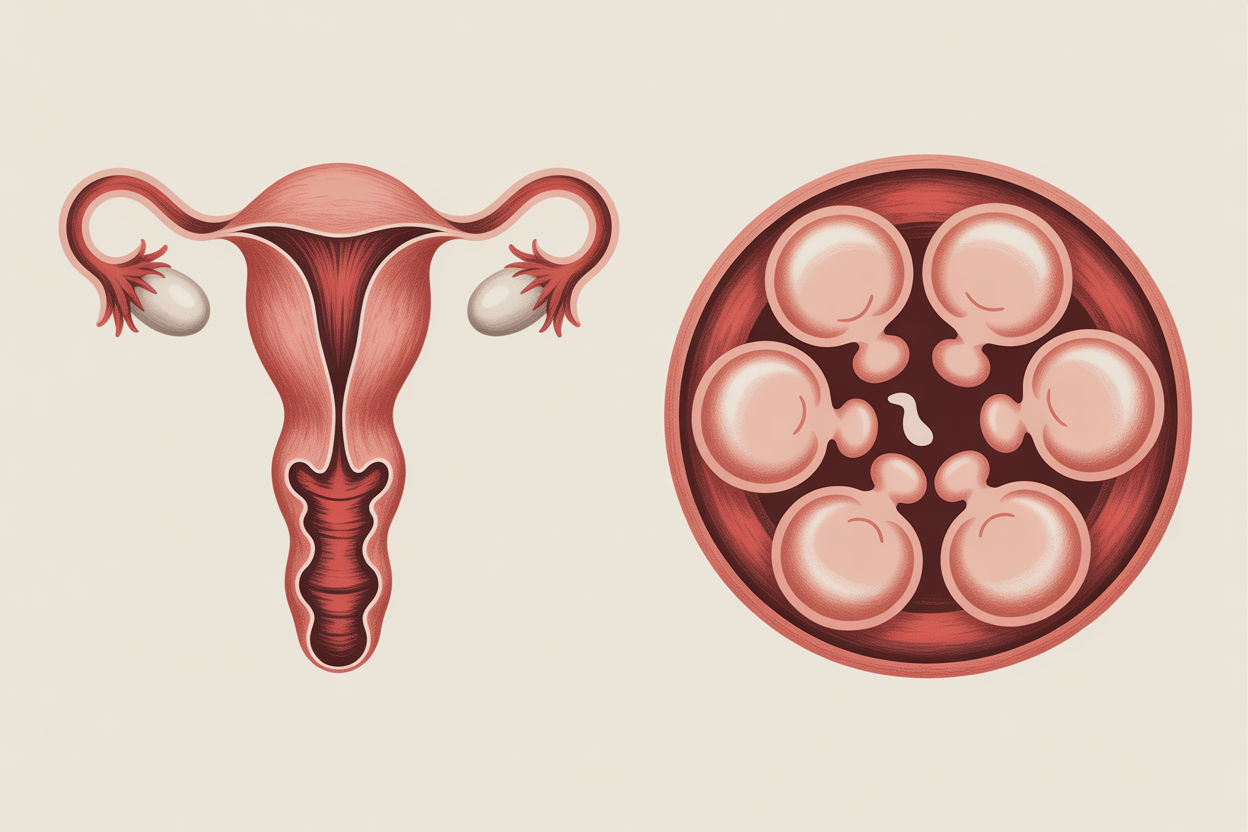
Seeing the key differences side-by-side can make the decision in the IUI vs. IVF debate much clearer. Both are excellent treatments, but they are designed for very different situations.
Comparison Table: IUI vs. IVF at a Glance
Feature | IUI (Intrauterine Insemination) | IVF (In Vitro Fertilization) |
Where Fertilization Occurs | Inside the body (in the fallopian tube) | Outside the body (in a laboratory) |
Core Concept | A “Boost” for natural conception | A “Bypass” of natural barriers |
Invasiveness | Minimally invasive (a simple office procedure) | More invasive (requires a minor surgical procedure for egg retrieval) |
Medication Protocol | Optional or mild (e.g., oral pills like Clomid) | Significant stimulation (8-14 days of daily injectable medications) |
Time Commitment | A few monitoring appointments per cycle | A 4-6 week cycle with frequent monitoring appointments |
Typical IUI Success Rate | Lower per cycle (~10-20% for women <35) | Higher per cycle (~40-50%+ for women <35) |
IUI Cost Bangalore (Est.) | Lower per-cycle cost (approx. ₹7,000 – ₹20,000) | Higher per-cycle cost (approx. ₹1,10,000 – ₹2,50,000+) |
Success Rates: A Realistic Look at Your Chances (IUI vs. IVF)
One of the most important factors in your decision will be the iui success rate versus the IVF success rate. It’s essential to be realistic about the chances of success for each treatment.
What is the Typical IUI Success Rate?
The iui success rate is modest on a per-cycle basis, which is why it’s a treatment that often requires persistence.
- Per Cycle: For women under 35, the iui success rate is generally 10% to 20% per cycle.This is important to note: these chances are very similar to the 20-25% monthly chance a healthy, fertile couple has of conceiving naturally.
- By Age: Age is the single most important factor in any fertility treatment.
- Under 35: ~13% to 17% per cycle
- Ages 35-40: ~9% to 13% per cycle
- Over 40: ~3% to 9% per cycle
- By Diagnosis:
- Unexplained Infertility: The iui success rate for this group is about 7% to 10% per cycle.
- Mild Male Factor: Success rates vary based on the medication used. With oral medication (Clomid), the rate is about 8% to 12%. With injectable medications, this can increase to 15% to 25%.
The 3-4 Cycle Rule: A Key Concept
When we recommend IUI, we often recommend a plan of 3 to 4 cycles. This isn’t an arbitrary number. Research shows that the vast majority of IUI successes (around 90%) will happen within the first three to four attempts.
After 3 or 4 unsuccessful cycles, the iui success rate per cycle drops significantly.This “failure” is not a failure at all—it’s valuable diagnostic information. It strongly suggests that the fertility issue is not a “boostable” problem (like timing) but a “bypass” problem (like a fertilization issue or egg quality) that IUI was never designed to fix. This is the clear signal that it’s time to transition to IVF, which directly addresses those issues. For women over 40, we accelerate this timeline and may only recommend 1-2 IUI cycles before moving to IVF.
How IVF Success Rates Compare
The IUI vs. IVF comparison becomes most clear when looking at success rates per cycle.
- Per Cycle: IVF success rates are significantly higher per attempt than IUI.
- By Age (Live Birth Rate per Embryo Transfer):
- Under 35: ~41% to 49%
- Ages 35-37: ~34%
- Ages 38-40: ~24% to 26%
- Over 40: ~7% to 11%
The Key Takeaway: For a woman under 35, one cycle of IVF (with a ~41% success rate) has a much higher chance of success than one cycle of IUI (at ~10-20%). In fact, it can take 3 to 4 IUI cycles to achieve the same cumulative success rate as just one IVF cycle.
The Financial Aspect: IUI Cost vs. IVF Cost in Bangalore

For most couples, the financial component is a major part of the decision. At ARKA Anugraha, we believe in full transparency, especially regarding the iui cost in Bangalore and IVF costs.
Breaking Down the IUI Cost in Bangalore
IUI is a widely accessible and affordable entry point into fertility treatment.
- Average Cost: A single cycle of IUI in Bangalore typically ranges from ₹7,000 to ₹20,000.
- What’s Included: This cost is lower because the procedure is simpler. The fee generally covers
- Initial fertility specialist consultation
- Ultrasound monitoring (follicular scans)
- Sperm washing and preparation
- The IUI procedure itself
- What’s Not Included: The main additional cost is for medications (oral or injectable), which can add ₹2,000 to ₹5,000 or more to your cycle cost.
Understanding the IVF Cost in Bangalore
IVF is a significant financial investment because it is a much more complex, lab-intensive procedure.
- Average Cost: A single IVF cycle in Bangalore typically costs between ₹1,10,000 and ₹2,50,000.
- What’s Included: This higher cost reflects the technology and expertise involved :
- Costly injectable stimulation medications
- Frequent blood tests and ultrasound monitoring
- All high-tech embryology lab fees
- The egg retrieval procedure (which requires anesthesia and an operating theatre)
- The embryo transfer procedure
- What’s Not Included: This base price may not include advanced options like ICSI, PGT (genetic testing), or the cryopreservation (freezing) of extra embryos.
The Real Decision: Cost-Per-Cycle vs. Cost-Per-Baby
This is one of the most important discussions we have with our patients. The “cheapest” option is not always the one with the lowest price tag per attempt. The most cost-effective option is the one that results in a healthy baby in the shortest amount of time and for the lowest total investment.
- Scenario 1 (Good IUI Bet): A 32-year-old with unexplained infertility. Trying three IUI cycles for a total cost of ~₹60,000 gives her a cumulative pregnancy chance of 20-30%. This is a very reasonable, logical, and cost-effective first step.
- Scenario 2 (Bad IUI Bet): A 39-year-old with diminished ovarian reserve. Trying three IUI cycles (~₹60,000) might only give her a 10-15% cumulative chance. She has spent significant time and money on a low-odds treatment. One IVF cycle, while more expensive upfront (~₹1,50,000), would have given her a ~24% chance in a single attempt. In this case, IVF is the more cost-effective and time-effective path.
The choice depends entirely on your personal diagnosis. Our team at ARKA Anugraha is here to help you make this decision wisely, without financial or emotional waste.
The ARKA Anugraha Difference: Why Your Choice of Clinic Matters
In the IUI vs. IVF journey, where you are treated can be as important as which treatment you choose. The standard approach to fertility is often purely procedural. At ARKA Anugraha Hospital, we offer something fundamentally different.
More Than a Procedure: Our “Integrative Fertility Care” Model
ARKA Anugraha Hospital is India’s first NABH-accredited Integrative & Functional Medicine Hospital.9 This means we don’t just treat symptoms; we investigate the root cause.
This is especially powerful for diagnoses like unexplained infertility. In conventional medicine, the answer is often to empirically try IUI and “see what happens”. We believe unexplained infertility is simply un-investigated infertility.
Our “Integrative Fertility Care” model looks at your entire body’s ecosystem. Your fertility is a reflection of your total health. We investigate underlying issues like gut health, chronic inflammation, hormone imbalances, and nutritional deficiencies that can impact fertility – issues other clinics may overlook.
We then blend the best of high-tech Western medicine (like IUI and IVF) with evidence-based holistic therapies. Our goal is to optimize your health, improve egg and sperm quality, and maximize your iui success rate or IVF success before a procedure even begins.
Your Integrative Care Team in Bangalore
When you become a patient at ARKA Anugraha, you get a multidisciplinary team dedicated to your whole health.
- Expert Gynaecology: Our team is led by experts like Dr. Saraswathi Ramesh, a Gold Medalist OB/GYN with over 38 years of experience. What makes her practice unique is her integration of this deep medical expertise with formal diplomas in Naturopathy and Yoga. She has pioneered a Yoga Therapy Unit, perfectly embodying our blend of science and holistic healing.
- Functional Medicine: Our functional medicine practitioners, including Dr. Gaurang Ramesh, will work with you to find and treat the root causes of your fertility challenges.
- Holistic Support: Your journey is supported by our in-house, evidence-based services, including Acupuncture and Dietitians/Nutritionists. These therapies are scientifically shown to reduce stress, improve blood flow to the uterus, and prepare your body for a healthy pregnancy.
Making the Choice: Your Personalized Consultation at ARKA
The decision between IUI vs. IVF should not be made from a blog post. It should be made in a warm, supportive, and comprehensive consultation with an expert who sees you as a whole person.
We invite you to schedule your appointment at ARKA Anugraha Hospital in JP Nagar, Bangalore.76 Here, you won’t just get a 15-minute procedural talk. You will receive a comprehensive integrative fertility assessment where we explore your full health history and create a personalized, effective, and holistic plan to help you grow your family.
Frequently Asked Questions (FAQ) About IUI vs. IVF
1. What is the main difference between IUI and IVF?
IUI (Intrauterine Insemination) helps sperm reach the egg naturally by placing washed sperm inside the uterus.
IVF (In-Vitro Fertilization) combines the egg and sperm outside the body and transfers the embryo back into the uterus.
2. Which treatment is better – IUI or IVF?
Neither is “better” for everyone.
IUI is usually recommended for mild fertility issues, while IVF is preferred for blocked tubes, low ovarian reserve, severe male-factor issues, or when faster results are needed.
3. How many IUI cycles should I try before moving to IVF?
Most fertility specialists suggest 3–4 IUI cycles before considering IVF, depending on age, diagnosis, and ovarian reserve.
4. Is IUI painful?
No. IUI is a quick, minimally invasive procedure and feels similar to a routine pelvic exam.
5. What is the success rate of IUI?
IUI success rates vary from 10–20% per cycle, depending on age, sperm quality, ovulation health, and underlying conditions.
6. What is the success rate of IVF?
IVF success rates are higher, ranging from 40–60% per cycle in women under 35. Success reduces with age but IVF still offers the best chances per cycle.
7. Who is IUI recommended for?
IUI is ideal for:
- Unexplained infertility
- Mild male-factor infertility
- Ovulation disorders
- Cervical mucus issues
- Same-sex couples & single parents (with donor sperm)
8. Who is IVF recommended for?
IVF is preferred for:
- Blocked or damaged fallopian tubes
- Severe male-factor infertility
- Endometriosis
- Low AMH or poor ovarian reserve
- Failed multiple IUI cycles
- Women over 35
- Genetic screening needs
9. Is IVF the only option if I have blocked fallopian tubes?
Yes. If both tubes are blocked, IVF is typically the most effective and recommended treatment.
10. Is fertility treatment safe?
Yes. Both IUI and IVF are safe when performed under the care of trained fertility specialists. At Arka Anugraha Hospital, treatments are evidence-based and medically supervised.
11. How long does each treatment take?
- IUI: 10–12 days per cycle
- IVF: 4–6 weeks from stimulation to embryo transfer
12. Can I choose the gender of my baby through IVF?
No. Gender selection for non-medical reasons is illegal in India under the PCPNDT Act.
13. How do I know which treatment is right for me?
Your doctor will decide based on:
- Age
- Hormone levels (AMH, FSH)
- Sperm analysis
- Tubal health
- Reproductive history
- Your family-building timeline
A consultation with a fertility specialist at Arka Anugraha Hospital ensures a personalized and accurate treatment plan.
14. Will lifestyle changes improve my fertility before IUI or IVF?
Yes. Nutrition, sleep, stress management, thyroid balance, and avoiding smoking/alcohol can significantly boost reproductive health.
15. Does IVF guarantee pregnancy?
No treatment can guarantee pregnancy, but IVF gives the highest possible success rates, especially with early evaluation and personalized treatment.
Explore Arka Recipes
Discover recipes that blend taste with health, crafted by our experts for your well-being.

Arka Diagnostics
Discover groundbreaking diagnostic services exclusive to India, now available at Arka Health, Bangalore